
Rubber Diaphragms
Rubber diaphragms for diaphragm pumps, control valves, compressors, gas regulators, automotive systems and sanitary applications — flat, beaded, fabric-reinforced and bonded-to-metal.
Product samples Rubber Diaphragms
Click any product to view a larger photo with dimensions and compound.
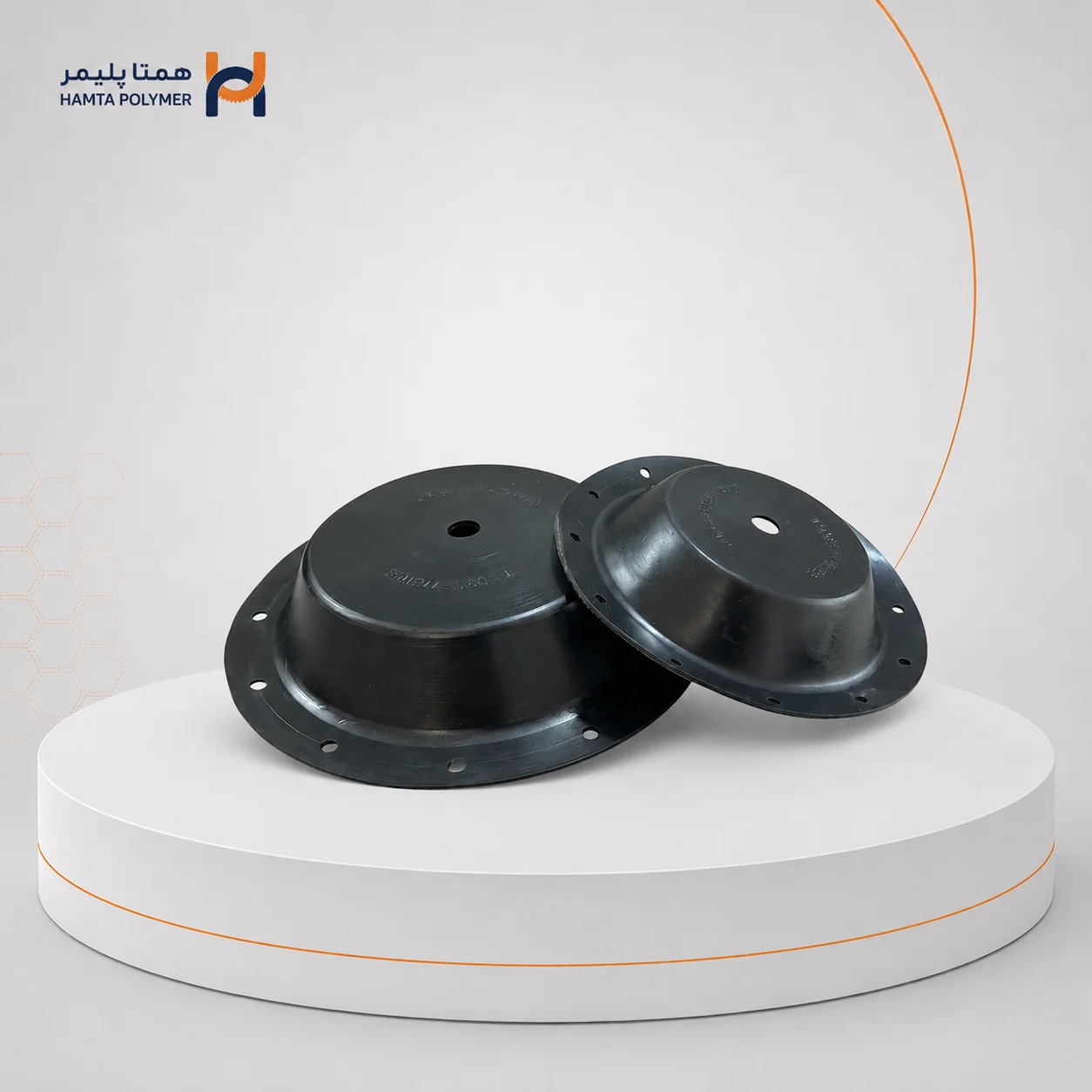 Rubber Diaphragms
Diaphragm Pump Membrane
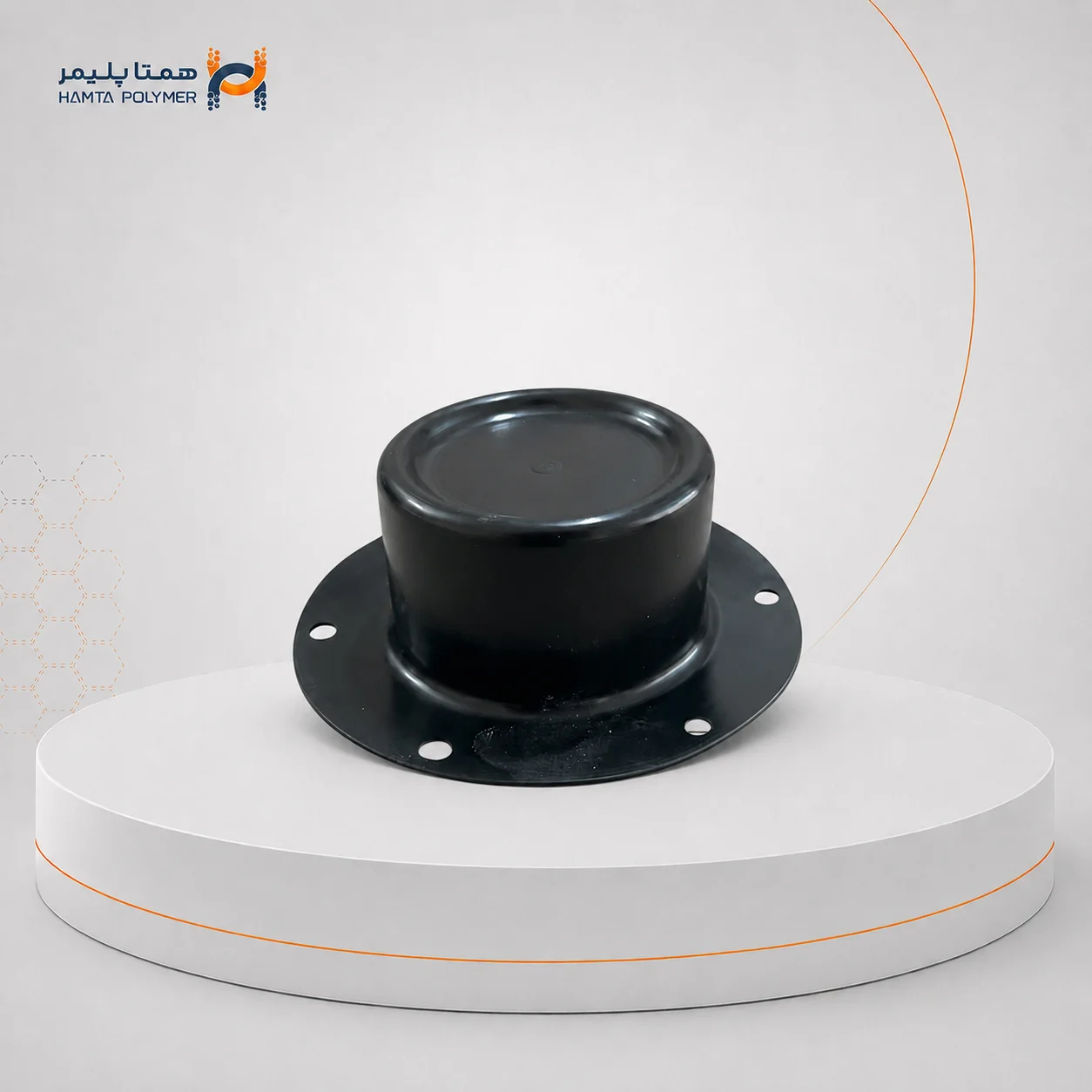 Rubber Diaphragms
Control Valve Diaphragm
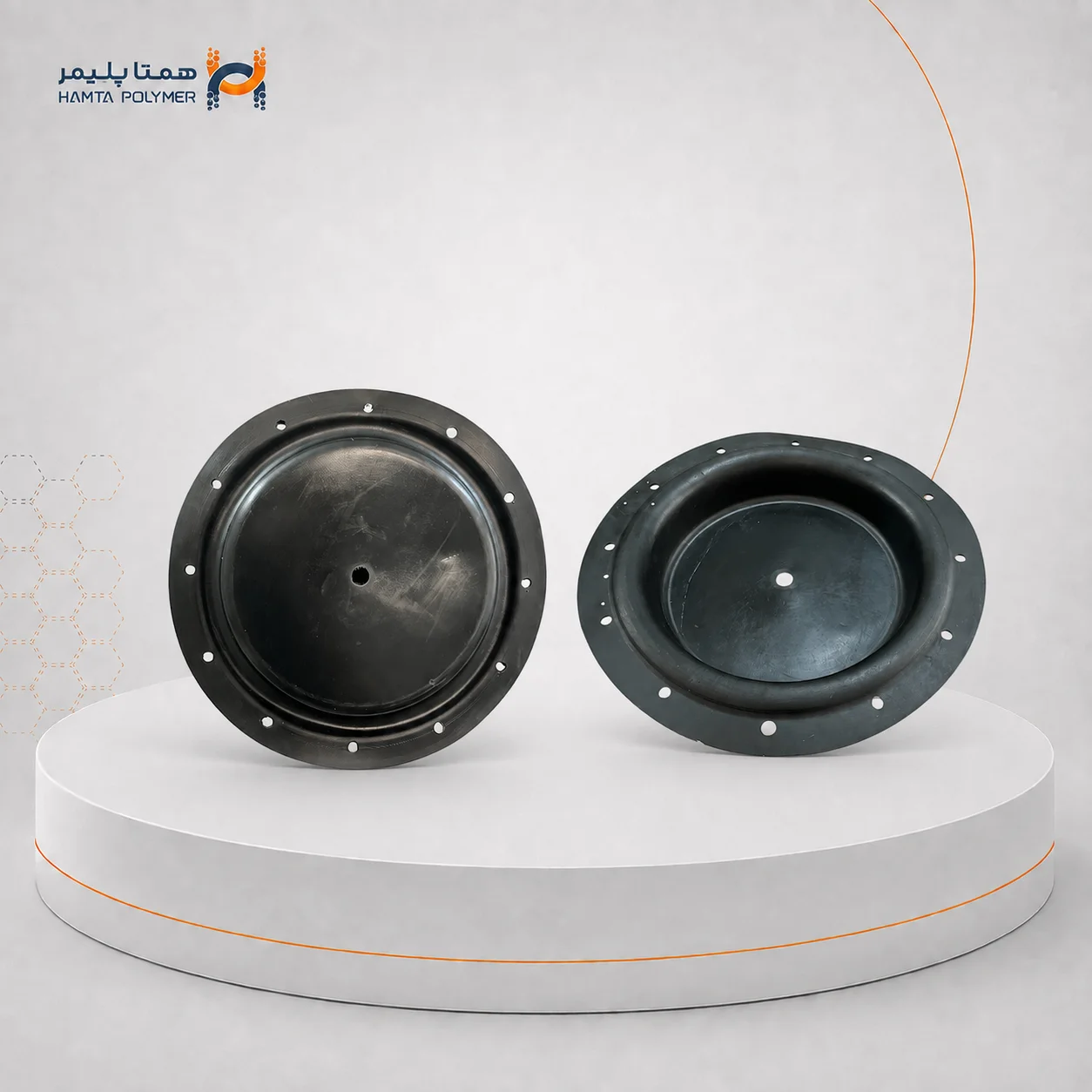 Rubber Diaphragms
Air Compressor Diaphragm
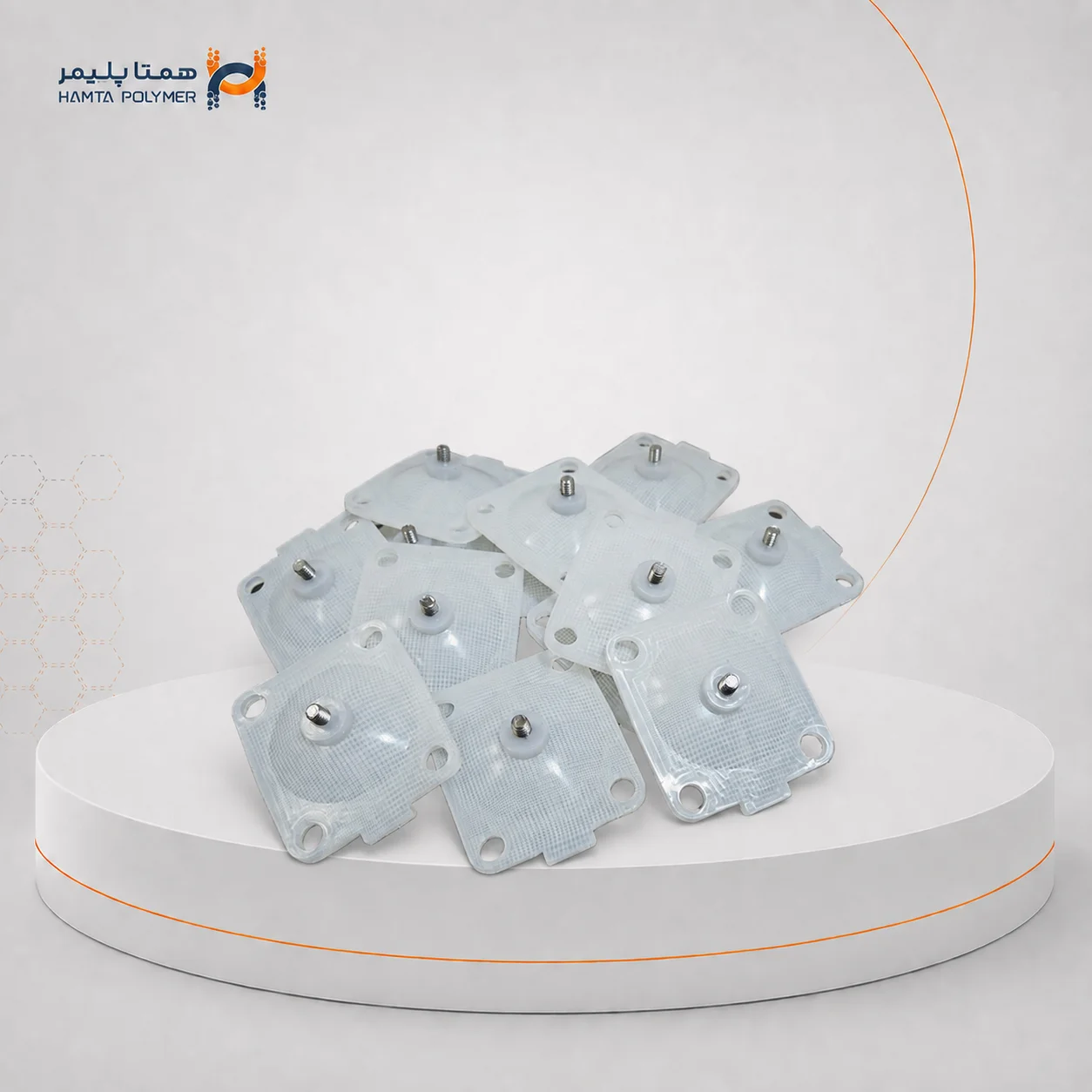 Rubber Diaphragms
Automotive Brake Diaphragm
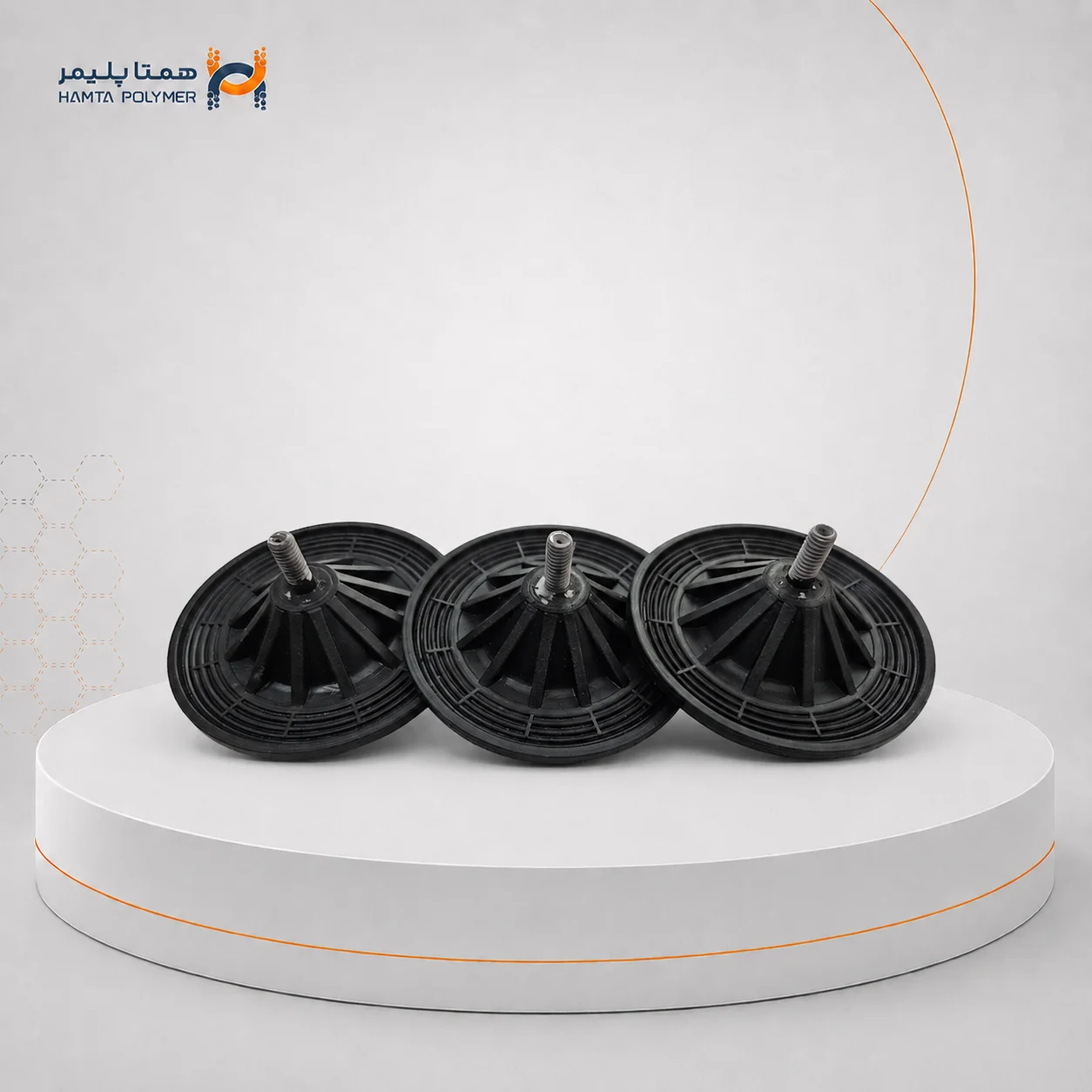 Rubber Diaphragms
Gas Regulator Diaphragm
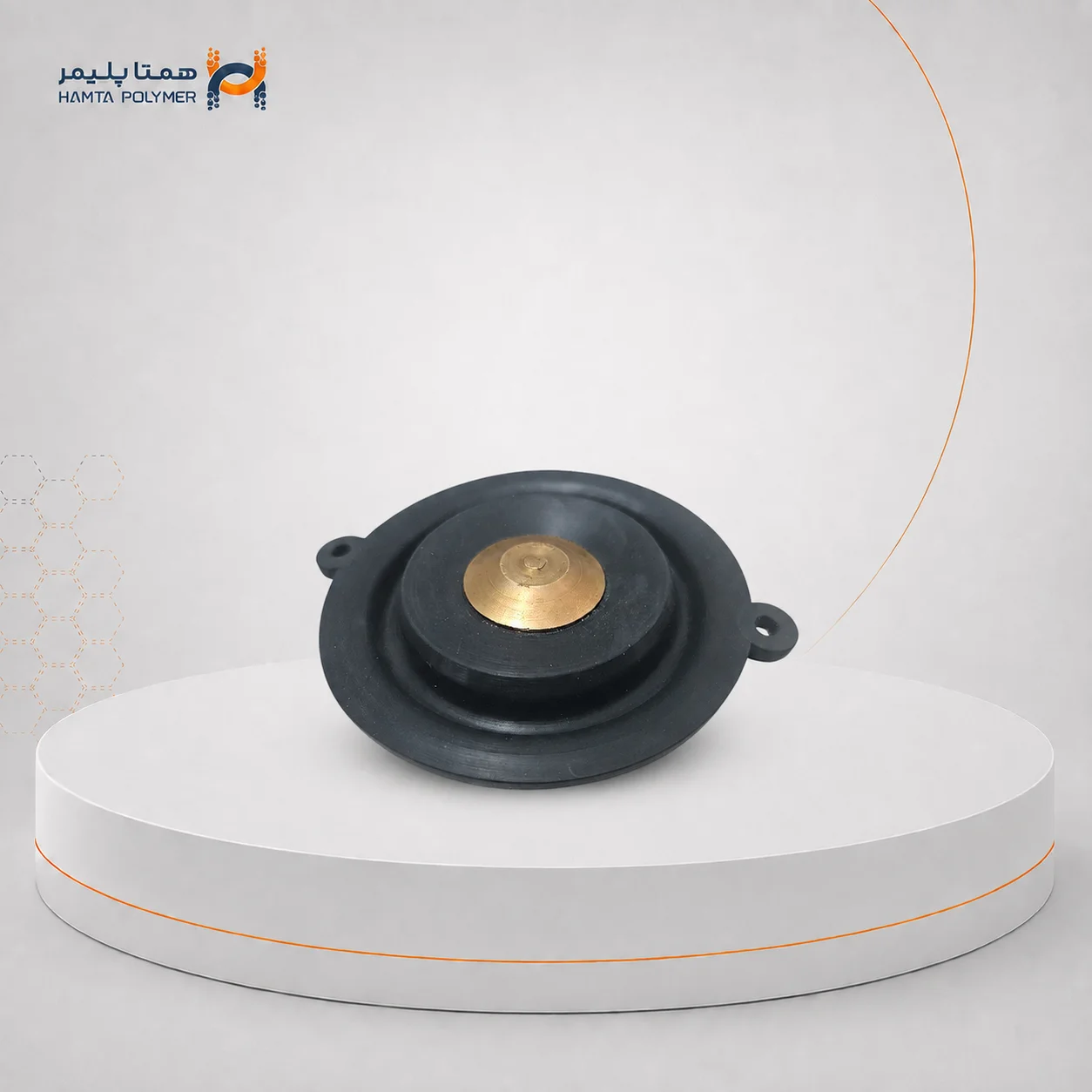 Rubber Diaphragms
Chemical Dosing Pump Diaphragm
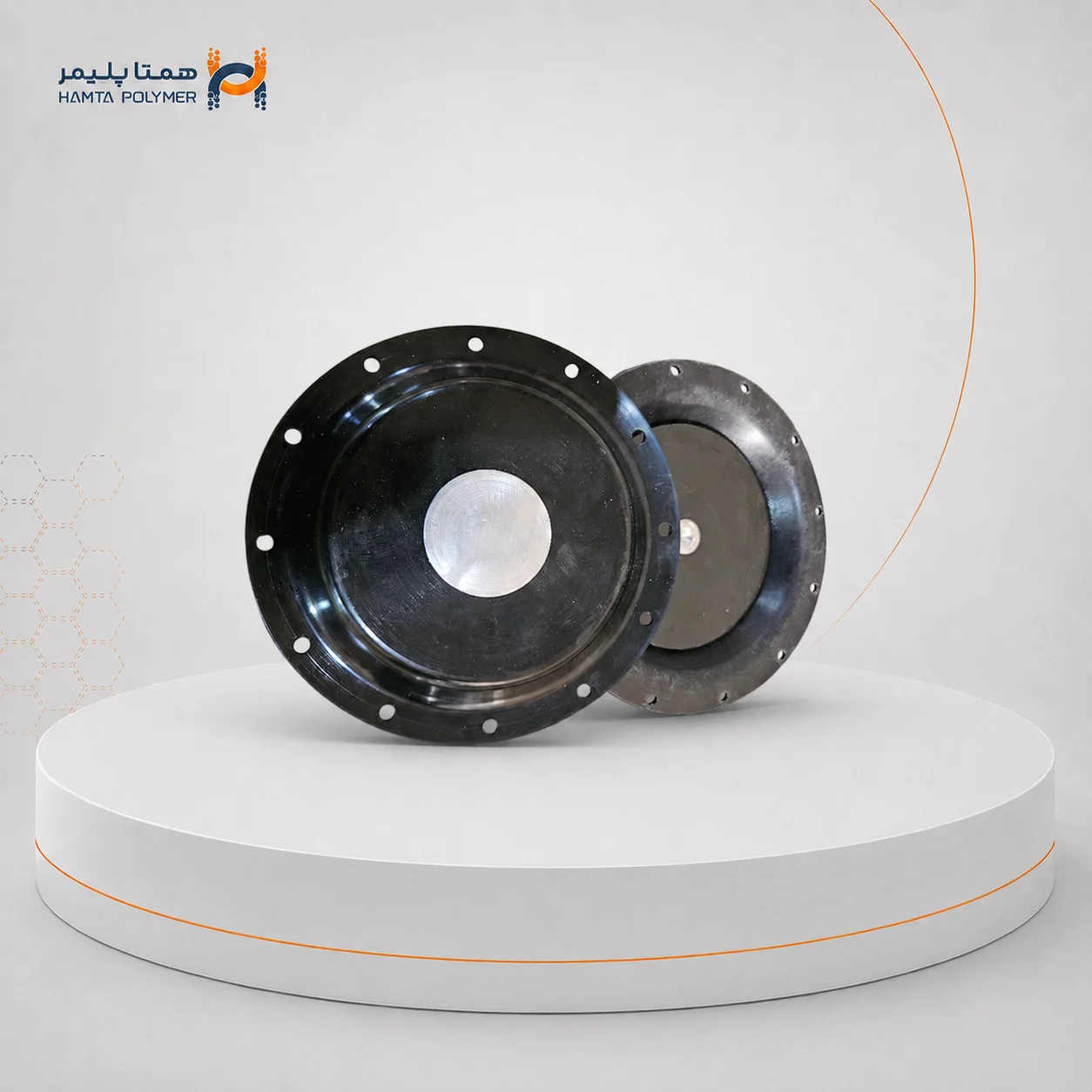 Rubber Diaphragms
Fabric-Reinforced Diaphragm
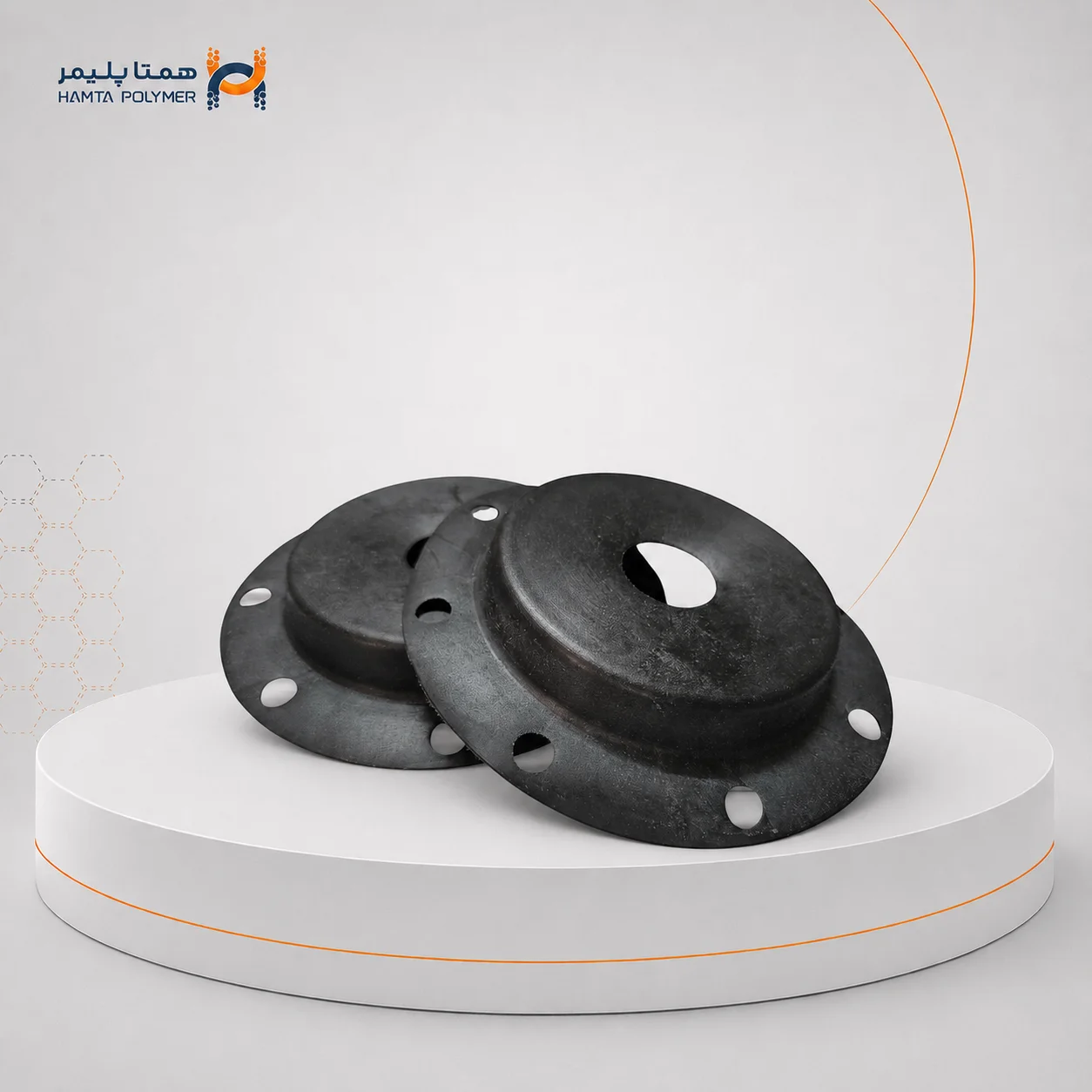 Rubber Diaphragms
Sanitary Silicone Diaphragm
A rubber diaphragm is a flexible membrane that meters or controls pressure through reciprocating motion in pumps, valves and regulators. Hamta Polymer produces them from 20 to 500 mm in NBR, EPDM, Viton, silicone and fabric-reinforced NR — flat, beaded, convoluted or bonded-to-metal, tested for burst pressure and flex fatigue.
A rubber diaphragm is a flexible membrane that meters, isolates or controls pressure through its reciprocating motion in diaphragm pumps, control valves and gas regulators — so cycle fatigue, operating pressure, stroke volume and fluid compatibility must be evaluated together, never in isolation.
Hamta Polymer produces industrial diaphragms as flat, beaded-edge, convoluted, fabric-reinforced and bonded-to-metal constructions.
Each order's design approach and test plan follow from the drawing, pressure, stroke and the customer's acceptance criteria. Where a project demands it, simulation or burst testing is declared explicitly in the technical offer and quality plan.
Where Rubber Diaphragms are used across industries
AODD diaphragm pumps
The prime consumable of air-operated double-diaphragm pumps moving chemicals, slurries and abrasive media in mining and process industries.
Valves and gas/water regulators
Pressure-controlling membranes in residential and industrial regulators and process valves — see also our industrial valve rubber parts category.
Automotive
Brake-system, hydraulic clutch and carburetor diaphragms resistant to brake fluid and fuel.
Food and pharmaceutical lines
Silicone and EPDM diaphragms with food-contact documentation for hygienic production and dosing lines.
Medical equipment
Infusion-pump and laboratory-equipment membranes in medical-grade compounds.
Compressors
Heat-resistant membranes for industrial air compressors running continuous compression cycles.
Quality assurance for Rubber Diaphragms
Burst pressure test
Flex fatigue test
Tensile strength and elongation at break(ASTM D412)
Shore A hardness measurement(ASTM D2240)
Compression set(ASTM D395)
Rheometer cure behavior
How our Rubber Diaphragms are produced
- 1
Lab analysis of sample or drawing to define compound, thickness and reinforcement (plain / fabric-reinforced / beaded / bonded-to-metal)
- 2
Wave-profile design or adaptation to the operating pressure and required stroke, with numerical analysis when defined within the project scope
- 3
Manufacture or modification of the compression-molding tool to the final profile
- 4
First-article curing plus burst and flex-fatigue testing
- 5
Final customer approval, then mass production with per-batch quality control
For engineers and technical buyers — product types, the full material matrix and a precise selection guide.
Rubber Diaphragms types available from Hamta Polymer
Beaded-edge diaphragm
An outer bead reinforced with an elastomeric cord gives a firmer grip and safer sealing in the flange groove — a common choice for diaphragm pumps and industrial pressure regulators.
Fabric-reinforced diaphragm
One or more nylon or polyester plies laminated between rubber layers raise allowable working pressure without excessive thickness or stiffness.
Flat vs convoluted (rolling) diaphragm
Flat diaphragms typically suit shorter strokes; convoluted profiles deliver larger stroke volumes — final performance should be validated by design analysis or periodic testing of the actual part.
Bonded-to-metal diaphragm
Vulcanized onto a steel or aluminum plate for higher working pressures and applications needing a robust mechanical link to a lever or piston rod; chemical bonding guarantees interface quality.
AODD pump diaphragms
For air-operated double-diaphragm pumps in chemical, mining and slurry transfer. Cycle life depends on pressure, frequency, fluid, geometry and installation quality — always assessed against the real duty.
Control valve and gas regulator diaphragms
Precision membranes for residential and industrial gas regulators and process control valves; demand tight dimensional tolerances and highly uniform hardness.
Food and pharmaceutical grade
Producible in silicone or EPDM; the customer specifies and reviews the compound's contact documentation, service conditions and sterilization method for the final application.
Automotive diaphragms
Brake, hydraulic clutch and carburetor diaphragms in NBR/SBR compounds resistant to brake fluid and fuel.
Compressor diaphragms
Heat-resistant FKM/Viton compounds for air compressors with high operating temperatures and continuous compression cycles.
Full engineering material matrix for Rubber Diaphragms
A compound selection guide based on operating temperature, fluid type and mechanical demand — for industrial orders, match the material to the real service conditions.
| Compound | Operating temperature range | Fluid resistance | Key mechanical property |
|---|---|---|---|
| NBR (Nitrile) | −40 to +120 °C | Mineral oils, brake fluid, gasoil and gasoline | Good flex-fatigue resistance in repeated cycles; the most economical option |
| EPDM | −40 to +150 °C | Hot water, steam, diluted acids and alkalis (not oils) | Suited to gas regulators and outdoor duty (UV/ozone resistant) |
| FKM / Viton | −20 to +200 °C | Hydrocarbons, fuels and many aggressive chemicals | The choice for compressor and hot chemical dosing pump diaphragms |
| VMQ (Silicone) | −55 to +220 °C | Air and water steam; low resistance to oils/fuels | High flexibility at low temperature; the sanitary/pharma option |
| NR (Natural Rubber) | −50 to +80 °C | Water and air; low resistance to oils and solvents | Best-in-class flex fatigue; the standard choice for fabric-reinforced builds |
| CR (Neoprene) | −35 to +120 °C | Diluted mineral oils; good ozone and weathering resistance | Good dimensional stability; a solid automotive-diaphragm option |
The listed ranges are general material selection guides; final service conditions must be reconciled with the fluid type, pressure, part geometry and order specifications.
How to choose the right Rubber Diaphragms
Specify five factors before ordering: (1) exact diameter and thickness — measured with a micrometer or matched to an old sample; (2) working pressure and required safety margin versus burst pressure; (3) stroke volume, to choose flat vs convoluted; (4) fluid type and temperature, which set the compound (see table above); (5) reinforcement needs (fabric/bead/metal bonding) according to pressure and mounting style. When in doubt, sending the drawing or old sample to Hamta Polymer's engineers is the fastest route to an exact match.
Frequently asked questions about Rubber Diaphragms
It has an outer rim reinforced with an elastomeric cord, giving a firmer grip in the flange groove and safer sealing. It also resists edge slip or displacement better at high working pressures.
A fabric-reinforced diaphragm carries one or more nylon/polyester plies between rubber layers, raising pressure capability without excessive stiffness or thickness. Plain diaphragms remain the simpler, more economical answer at lower pressures.
There is no universal number. Real life depends on pressure, stroke amplitude and frequency, fluid, temperature, geometry and installation quality. Declare the duty conditions first, then define an appropriate cycle-life test to state a target life honestly.
Flat suits smaller strokes, lower pressures and simpler manufacturing. Convoluted profiles handle larger strokes and deliver longer flex-fatigue life thanks to their engineered wave geometry.
When working pressures are high or the design needs a direct, robust mechanical link to a lever or piston rod — common in certain pumps and compressors where the plate carries the load.
Ideally the CAD/DWG drawing with operating pressure and required stroke. No drawing? A physical sample — even worn out — is enough for full reverse-engineering in our lab.
Other categories
The full rubber and polymer product range
Industrial O-Rings
7 products
Rubber Packing & Gaskets
7 products
Conveyor Rollers
2 products
Shock & Vibration Dampers
8 products
Rubber Strips & Extruded Profiles
6 products
Silicone Rubber Parts
13 products
Flexible Rubber Couplings
4 products
Rubber Dust Boots & Bellows
2 products
Bonded Rubber-Metal Parts
6 products
Miscellaneous Industrial Rubber Parts
10 products
Valve Rubber Components
2 products
Rubber Expansion Joints
1 products
Medical & Lab Equipment Parts
5 products
Ready to order Rubber Diaphragms?
Send us the dimensions, a drawing or a worn-out sample together with your media, temperature and pressure — our engineering team will come back with the fastest possible quotation and lead time.