
Shock & Vibration Dampers
Rubber dampers and anti-vibration mounts for machinery, bridges, docks and structures — geometry, compound and stiffness engineered against real load and excitation data.
Product samples Shock & Vibration Dampers
Click any product to view a larger photo with dimensions and compound.
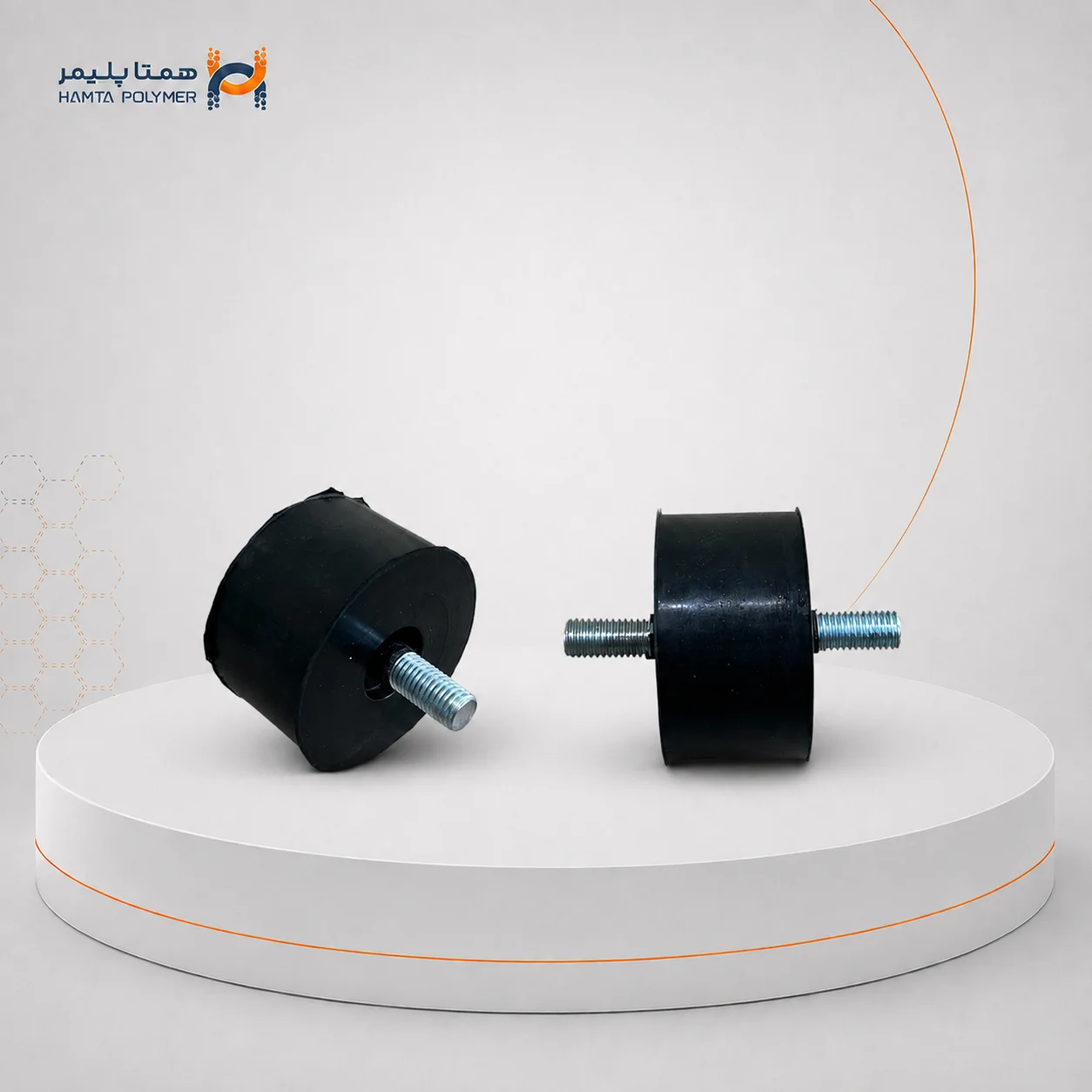 Shock & Vibration Dampers
Industrial Cylindrical Shock Damper
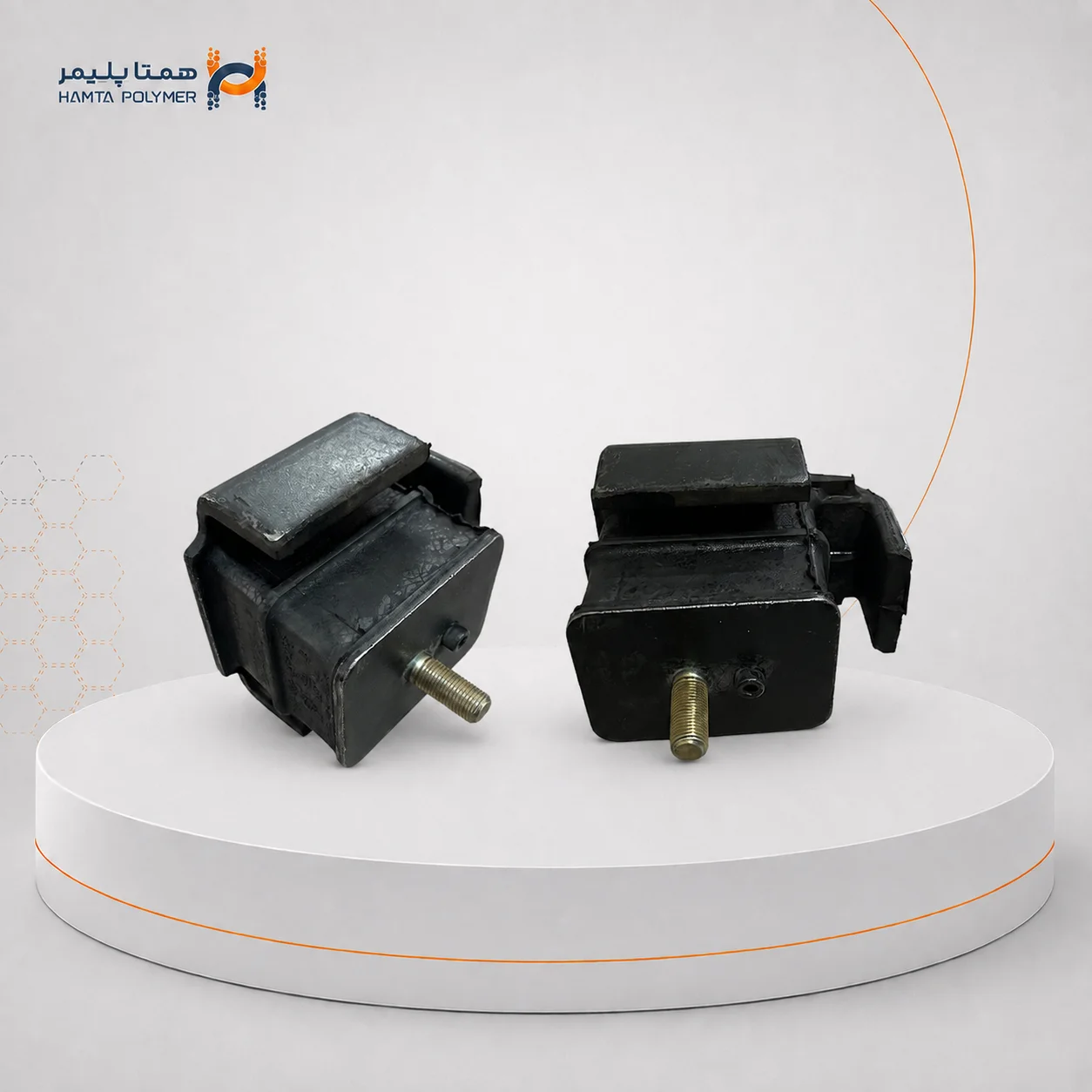 Shock & Vibration Dampers
Bridge & Road Structure Damper
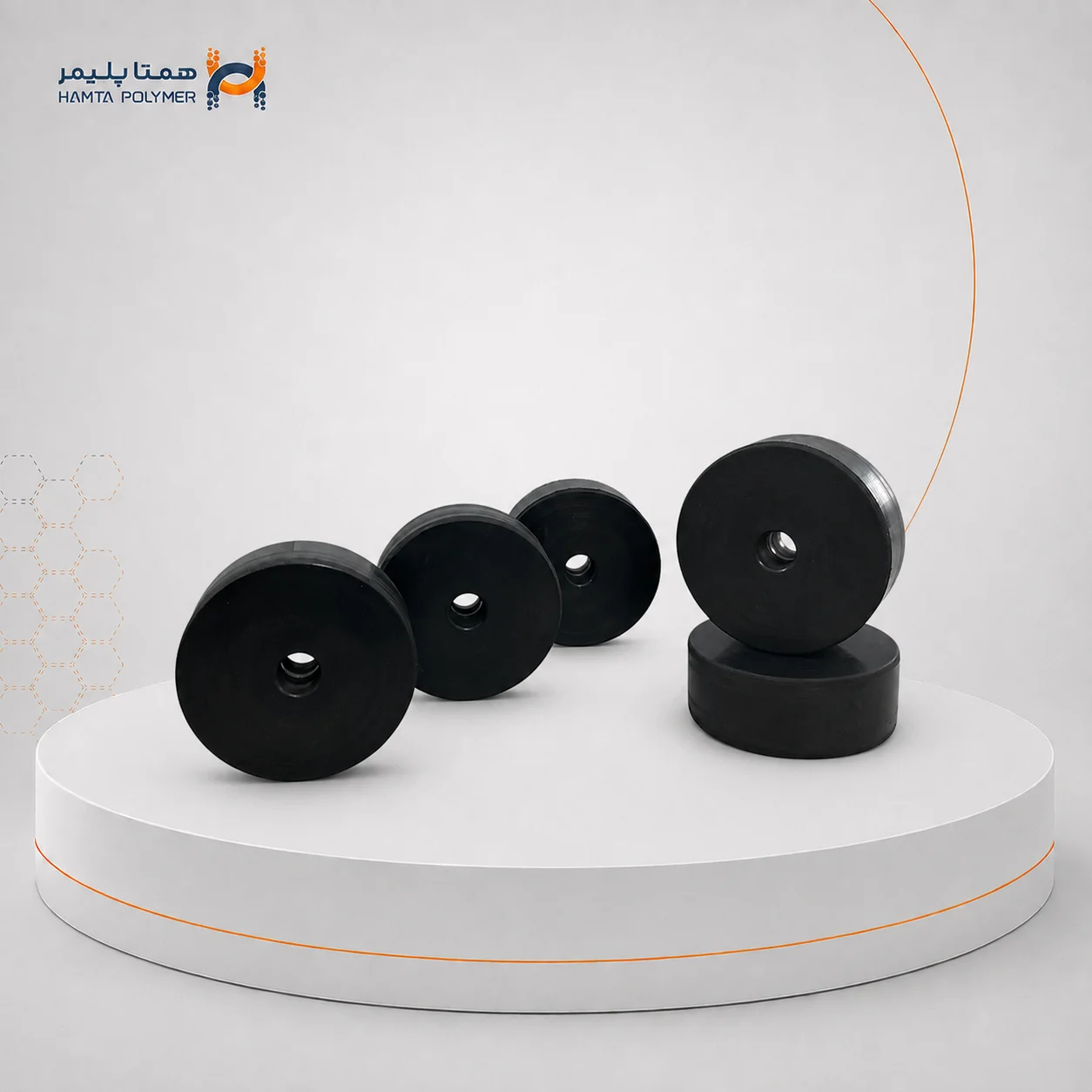 Shock & Vibration Dampers
Industrial Machinery Damper
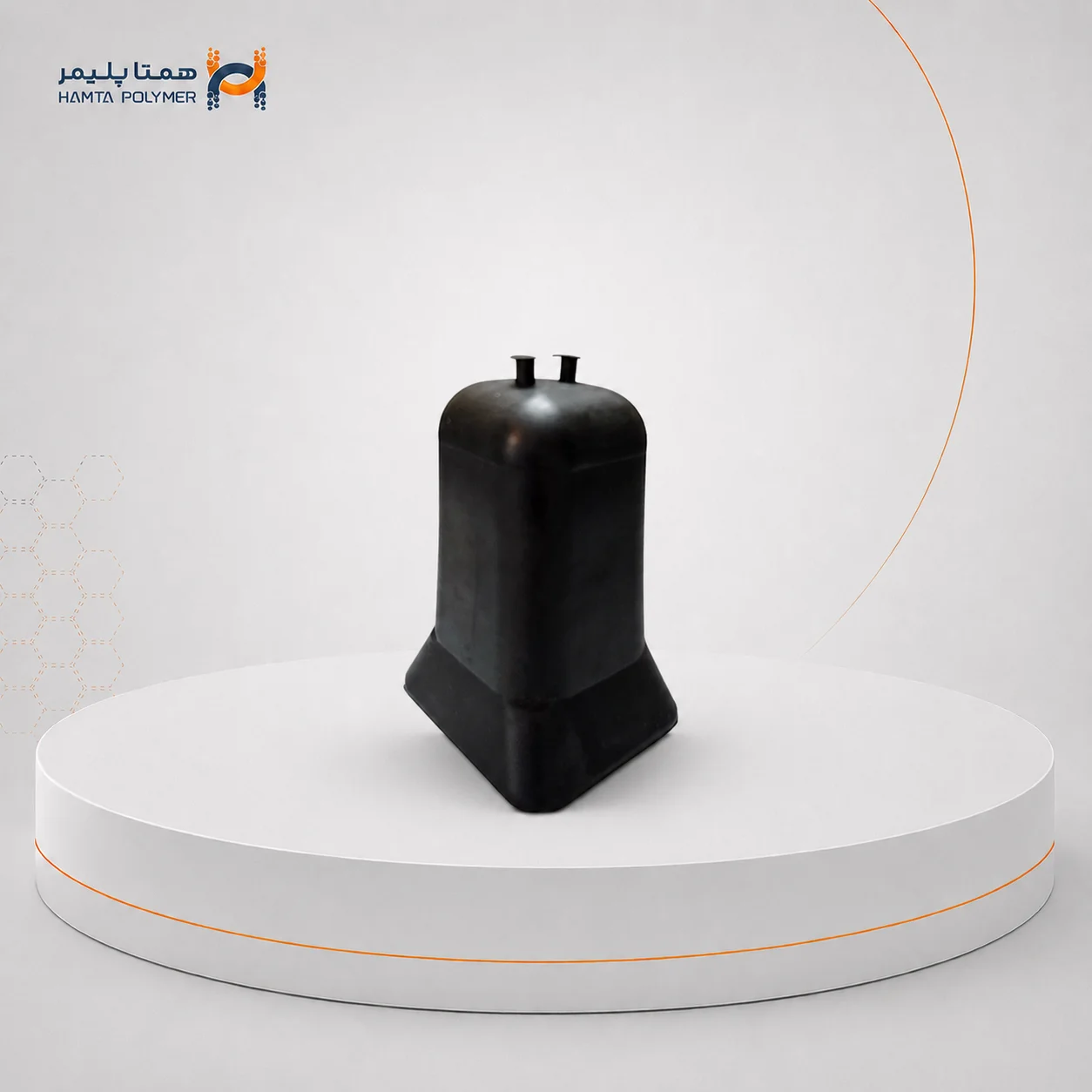 Shock & Vibration Dampers
Spring-Rubber Composite Damper
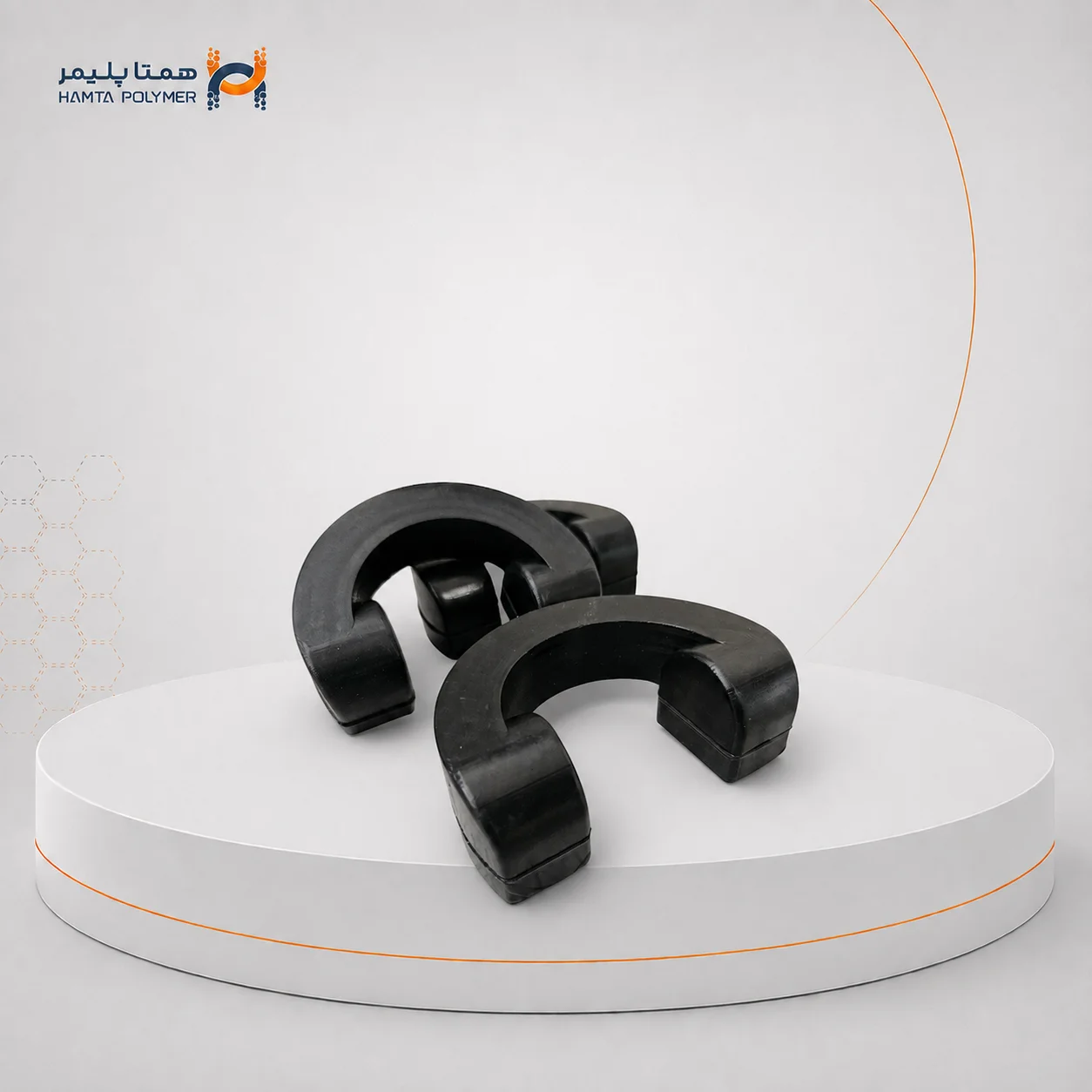 Shock & Vibration Dampers
Container & Dock Bumper
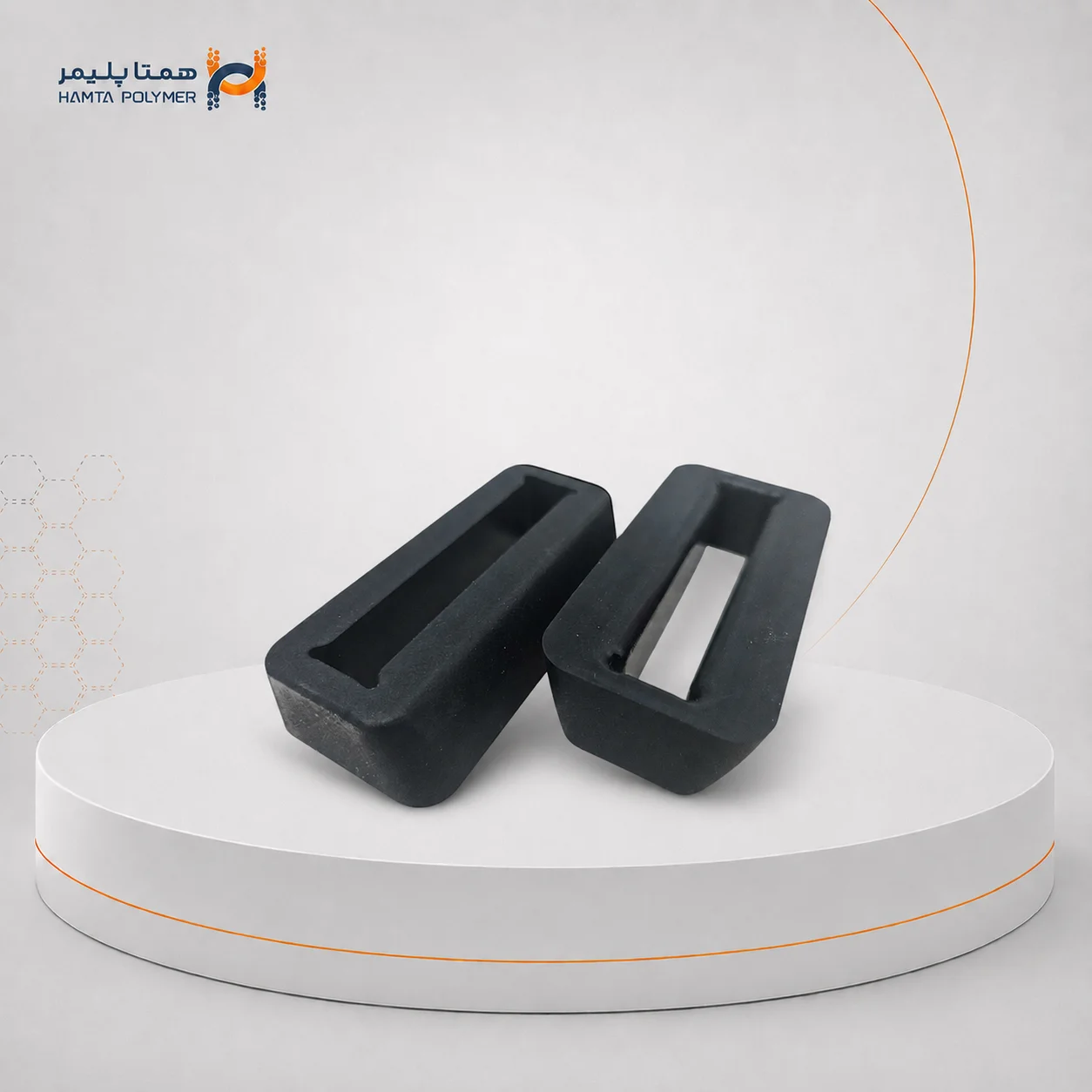 Shock & Vibration Dampers
Engine & Pump Vibration Mount
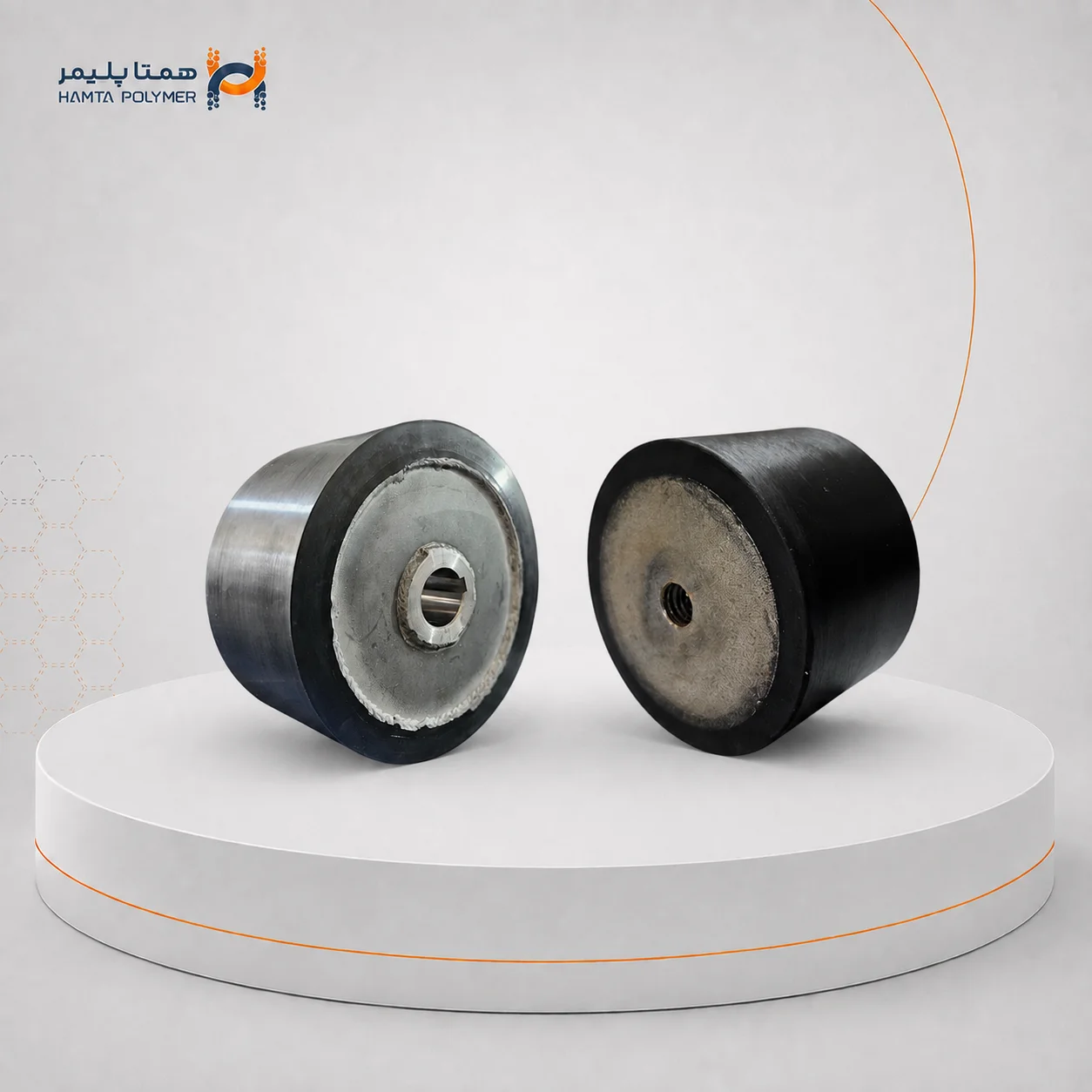 Shock & Vibration Dampers
Elevator Buffer Damper
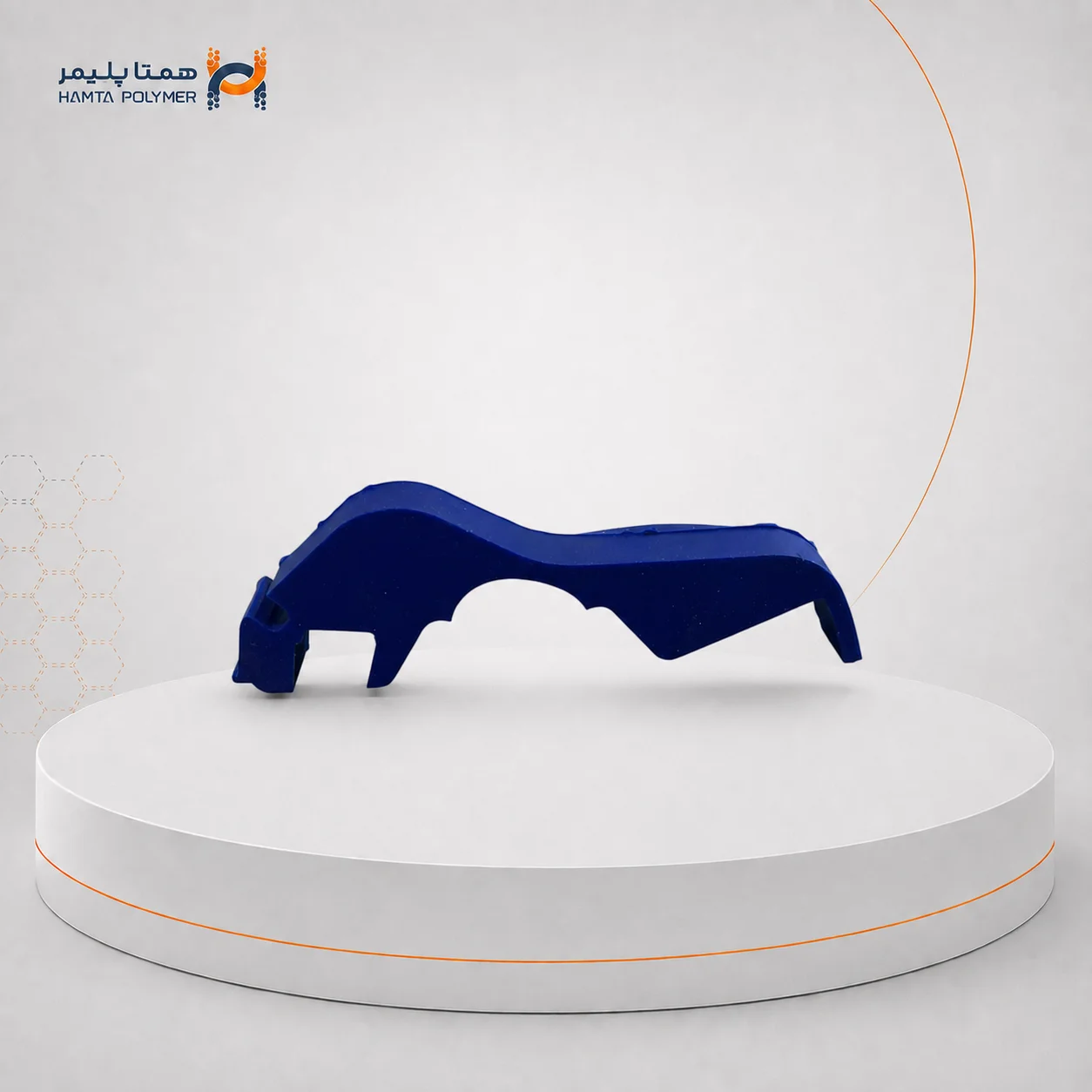 Shock & Vibration Dampers
Pipe Support Rubber Pad
A rubber damper or anti-vibration mount absorbs shock and blocks vibration transfer between a machine or structure and its foundation. Hamta Polymer designs them from your static load, excitation frequency and allowable deflection — as cylindrical, conical or metal-rubber sandwich mounts.
A damper or elastomeric mount absorbs sudden shocks and reduces vibration transfer between a moving component or structure and its foundation. Correct selection is not just about the rubber grade — it depends on static and dynamic load, excitation frequency, allowable deflection and installation conditions.
Hamta Polymer produces cylindrical and conical dampers as well as metal-rubber sandwich constructions. Geometry, hardness and compound are defined only after receiving the real system data, and first articles are evaluated against an agreed acceptance criterion.
Where Shock & Vibration Dampers are used across industries
Construction and bridges
Bearing pads for bridge supports and structural protection against seismic vibration.
Industrial machinery
Anti-vibration mounts for CNC machines, compressors and pumps to cut vibration transfer into the building.
Automotive and heavy equipment
Engine mounts and front-end bumpers absorbing shock and engine vibration.
Ports and marine works
Dock fenders absorbing vessel berthing energy in harbors.
Railways
Under-rail pads reducing vibration and noise along the line.
Factories
Engine and compressor base isolators protecting the foundation from transmitted vibration.
Quality assurance for Shock & Vibration Dampers
Static load test
Natural frequency and dynamic stiffness
Metal-rubber bond integrity (peel/bond test)
Shore A hardness measurement(ASTM D2240)
Compression set(ASTM D395)
Common failure patterns in Shock & Vibration Dampers
Resonance instead of isolation
Cause: Wrong stiffness puts the mount's natural frequency too close to the source frequency
Fix: Re-calculate stiffness and compound from the system mass and actual excitation frequency
Rubber-to-metal debonding
Cause: Inadequate surface preparation or a non-conforming bonding process
Fix: Re-prepare surfaces and review bonding and cure parameters
Height loss under continuous load
Cause: High compression set, or service load above the design rating
Fix: Review compound, geometry and static-load safety margin
How our Shock & Vibration Dampers are produced
- 1
Receipt of static/dynamic load specs, excitation frequency and allowable deflection, or physical sample analysis
- 2
Calculation of stiffness and compound hardness to hit the target isolation frequency
- 3
Geometry design (cylindrical / conical / sandwich) plus metal surface preparation (grit blasting and primer) for bonding
- 4
First-article cure and chemical bonding, then static load and natural-frequency testing
- 5
Customer approval, then production with per-batch quality control
For engineers and technical buyers — product types, the full material matrix and a precise selection guide.
Shock & Vibration Dampers types available from Hamta Polymer
Sandwich (metal-rubber) mount
Rubber layers bonded between steel plates; carries high loads while allowing controlled movement. Standard on bridge supports and heavy machinery foundations.
Engine mount
Isolates engine vibration in vehicles and industrial machines before it reaches the chassis or foundation.
Structural bearing pad
For very high static loads on bridge supports and structures, while permitting limited thermal or seismic movement.
Machinery vibration isolator
Anti-vibration feet for CNC machines, compressors and pumps that need precision preserved and vibration kept out of the floor.
Dock and marine fender
Absorbs vessel impact energy at berths; demands large dimensions, high energy absorption and seawater-resistant construction.
Rail pad
Reduces vibration and noise from passing trains and extends track life, with stiffness tuned to preserve rail geometry.
Full engineering material matrix for Shock & Vibration Dampers
A compound selection guide based on operating temperature, fluid type and mechanical demand — for industrial orders, match the material to the real service conditions.
| Compound | Operating temperature range | Fluid resistance | Key mechanical property |
|---|---|---|---|
| NR (Natural Rubber) + steel | −30 to +80 °C | Low oil resistance; best in dry environments | Highest resilience and energy absorption; the default for bearing pads and general dampers |
| NBR + steel | −40 to +120 °C | Mineral oils and greases | The choice for machinery isolators in oily environments (pumps, compressors) |
| CR (Neoprene) + steel | −35 to +120 °C | Good ozone, weathering and light-oil resistance | Stable outdoors; common for bridge pads and external dampers |
| SBR + steel | −20 to +80 °C | Low oil resistance | Economical abrasion resistance; suited to rail pads and general dampers |
The listed ranges are general material selection guides; final service conditions must be reconciled with the fluid type, pressure, part geometry and order specifications.
How to choose the right Shock & Vibration Dampers
Before ordering a damper or isolator, prepare: (1) the static load mass (kg); (2) the frequency (Hz) of the vibration source you want isolated; (3) maximum allowable deflection; (4) the environment (temperature, oil exposure, indoor/outdoor) for compound selection. Unlike most sealing parts, a wrongly chosen stiffness can increase vibration — let our technical team calculate these values from your real system data.
Frequently asked questions about Shock & Vibration Dampers
A bearing pad is engineered for very high static loads (such as bridge supports) and usually permits limited movement for thermal expansion or seismic action. A regular damper focuses on absorbing momentary shock or vibration in machines and vehicles.
With a specific stiffness and supported mass it creates a natural frequency below the excitation frequency. In that regime most vibration energy is absorbed by the elastomer instead of reaching the foundation.
From engine mass, operating speed and allowable deflection, our engineers compute the stiffness and compound that avoid resonance while preserving alignment.
It is designed to absorb a vessel's berthing energy — typically much larger, with high energy-absorption capacity and resistance to seawater and marine weathering.
If the mount's natural frequency lands near the excitation frequency it resonates and amplifies the problem. That is why stiffness must be calculated, not guessed.
Other categories
The full rubber and polymer product range
Industrial O-Rings
7 products
Rubber Packing & Gaskets
7 products
Rubber Diaphragms
8 products
Conveyor Rollers
2 products
Rubber Strips & Extruded Profiles
6 products
Silicone Rubber Parts
13 products
Flexible Rubber Couplings
4 products
Rubber Dust Boots & Bellows
2 products
Bonded Rubber-Metal Parts
6 products
Miscellaneous Industrial Rubber Parts
10 products
Valve Rubber Components
2 products
Rubber Expansion Joints
1 products
Medical & Lab Equipment Parts
5 products
Ready to order Shock & Vibration Dampers?
Send us the dimensions, a drawing or a worn-out sample together with your media, temperature and pressure — our engineering team will come back with the fastest possible quotation and lead time.