
Valve Rubber Components
Custom rubber components for industrial valves — seats, diaphragms and O-rings — manufactured to drawing or sample in compounds matched to the line media.
Product samples Valve Rubber Components
Click any product to view a larger photo with dimensions and compound.
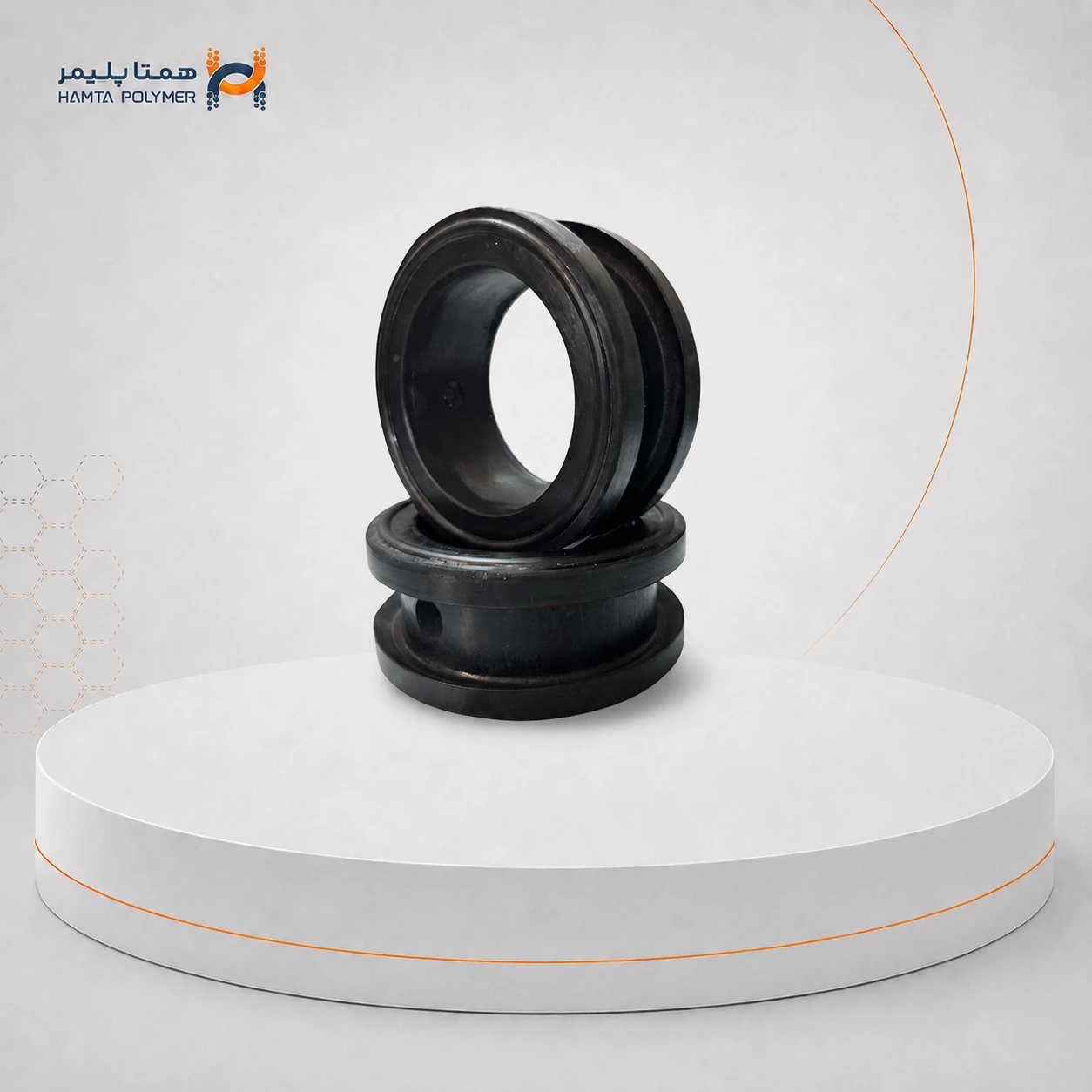 Valve Rubber Components
Industrial Valve Diaphragm Membrane
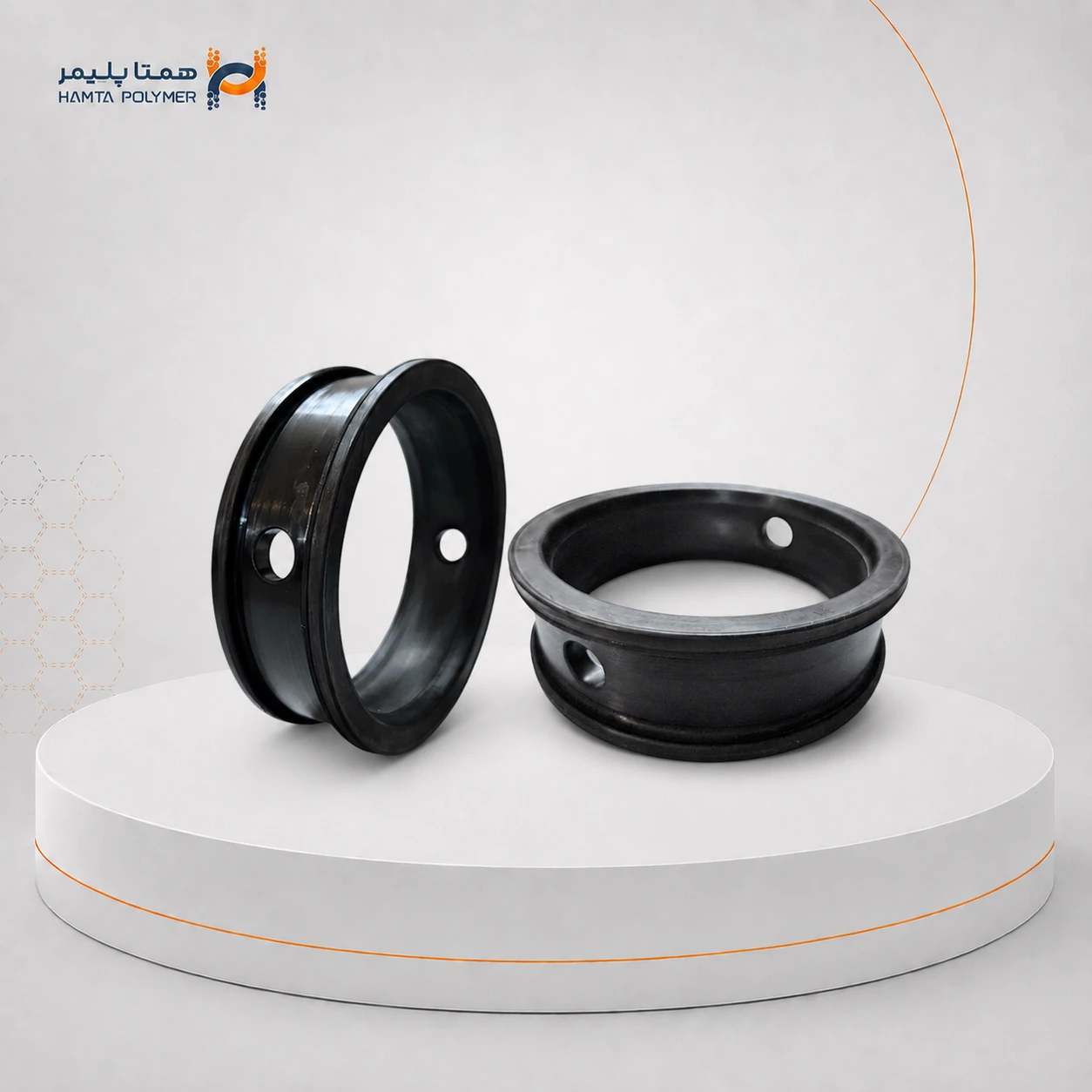 Valve Rubber Components
Rubber Valve Seat
Hamta Polymer manufactures only the rubber components inside industrial valves — seats, control diaphragms and stem/bonnet O-rings — not valve bodies. Parts are made to drawing or sample in NBR, EPDM and Viton, matched to your line's fluid, pressure and temperature.
Hamta Polymer manufactures the internal rubber components of industrial valves — not the valve body and not complete assemblies. This category covers the elastomeric seat, the diaphragm and custom O-rings; every part's dimensions and compound must be matched to the line's fluid, temperature, pressure and valve design.
For diaphragm construction details, materials and dedicated tests, also see our Rubber Diaphragms page →
Where Valve Rubber Components are used across industries
Oil, gas & petrochemicals
Viton seats and O-rings for valves handling hydrocarbons.
Water & wastewater
EPDM seats and diaphragms for control valves and regulators in treatment plants and distribution networks.
Residential & industrial gas distribution
Rubber diaphragms and seats for gas pressure regulators.
Quality assurance for Valve Rubber Components
Seat dimensional and hardness control (Shore A)(ASTM D2240)
Leak test
Compression set(ASTM D395)
Diaphragm burst test
How our Valve Rubber Components are produced
- 1
Registration of part type, fluid, pressure, temperature and duty-cycle count
- 2
Measurement and definition of sealing and assembly tolerances
- 3
Selection of a compatible compound and manufacture of the required mold or tooling
- 4
Sample production with dimensional, hardness and visual control
- 5
Customer-defined functional testing, then order production
For engineers and technical buyers — product types, the full material matrix and a precise selection guide.
Valve Rubber Components types available from Hamta Polymer
Rubber valve seat
The elastomeric ring forming the valve's primary sealing surface; its dimensional tolerances and precise hardness directly determine sealing quality. Hamta Polymer produces only this rubber ring — not the valve body or its actuation mechanism.
Control valve & pressure regulator diaphragm
A beaded or reinforced membrane modulating fluid pressure in process control valves and gas/water regulators. Full construction and test coverage on the Rubber Diaphragms page →
Custom valve O-rings
Standard or custom-size rings sealing the stem, bonnet and flanged connections of valves — typically NBR, Viton or EPDM according to the line fluid.
Full engineering material matrix for Valve Rubber Components
A compound selection guide based on operating temperature, fluid type and mechanical demand — for industrial orders, match the material to the real service conditions.
| Compound | Operating temperature range | Fluid resistance | Key mechanical property |
|---|---|---|---|
| NBR (Nitrile) | −40 to +120 °C | Mineral oils, gasoil and gasoline | The economical choice for general water and oil valve parts |
| EPDM | −40 to +150 °C | Hot water, steam, diluted acids and alkalis (not oils) | The common choice for water, wastewater and steam valve components |
| FKM / Viton | −20 to +200 °C | Hydrocarbons, fuels and many aggressive chemicals | For valve parts contacting hydrocarbons and aggressive chemical media |
The listed ranges are general material selection guides; final service conditions must be reconciled with the fluid type, pressure, part geometry and order specifications.
How to choose the right Valve Rubber Components
To order a valve rubber part, first define which part you need (seat, diaphragm or O-ring), then select the material by line fluid: NBR for general oil and water service, EPDM for water/steam, and Viton for hydrocarbons and aggressive chemicals. Because Hamta Polymer manufactures only the rubber component, the most accurate route is sending the drawing or physical sample of the rubber part itself — not the whole valve — so we can reverse-engineer the dimensions exactly.
Frequently asked questions about Valve Rubber Components
No. Hamta Polymer manufactures only the internal rubber components of valves — seats, diaphragms and O-rings. Valve bodies, metal connections and complete assemblies are outside this facility's product scope.
For most residential and industrial gas applications, NBR or EPDM is chosen by line temperature and humidity. Where liquefied hydrocarbon gases or condensates are present, Viton is the safer selection.
Yes. Send the technical drawing or the old rubber part itself; we reverse-engineer dimensions and material, confirm them, then start production.
Yes — that is the normal workflow. Send the worn seat sample or the seat drawing with groove dimensions, and the replacement is molded to fit without modifying the valve body.
Seat life depends on fluid, pressure, temperature and actuation cycles — from months in abrasive slurry to many years in clean water service. Declare the duty conditions and we recommend the compound and hardness with the best expected life for your case.
Most seats fall between 60 and 90 Shore A: softer compounds seal better on imperfect surfaces, harder compounds resist extrusion and wear at higher pressures. The seat geometry and line pressure decide.
Other categories
The full rubber and polymer product range
Industrial O-Rings
7 products
Rubber Packing & Gaskets
7 products
Rubber Diaphragms
8 products
Conveyor Rollers
2 products
Shock & Vibration Dampers
8 products
Rubber Strips & Extruded Profiles
6 products
Silicone Rubber Parts
13 products
Flexible Rubber Couplings
4 products
Rubber Dust Boots & Bellows
2 products
Bonded Rubber-Metal Parts
6 products
Miscellaneous Industrial Rubber Parts
10 products
Rubber Expansion Joints
1 products
Medical & Lab Equipment Parts
5 products
Ready to order Valve Rubber Components?
Send us the dimensions, a drawing or a worn-out sample together with your media, temperature and pressure — our engineering team will come back with the fastest possible quotation and lead time.