
Conveyor Rollers
Rubber and polyurethane conveyor rollers, lagged and re-coverable, custom-manufactured to your line's dimensions, load and speed.
Product samples Conveyor Rollers
Click any product to view a larger photo with dimensions and compound.
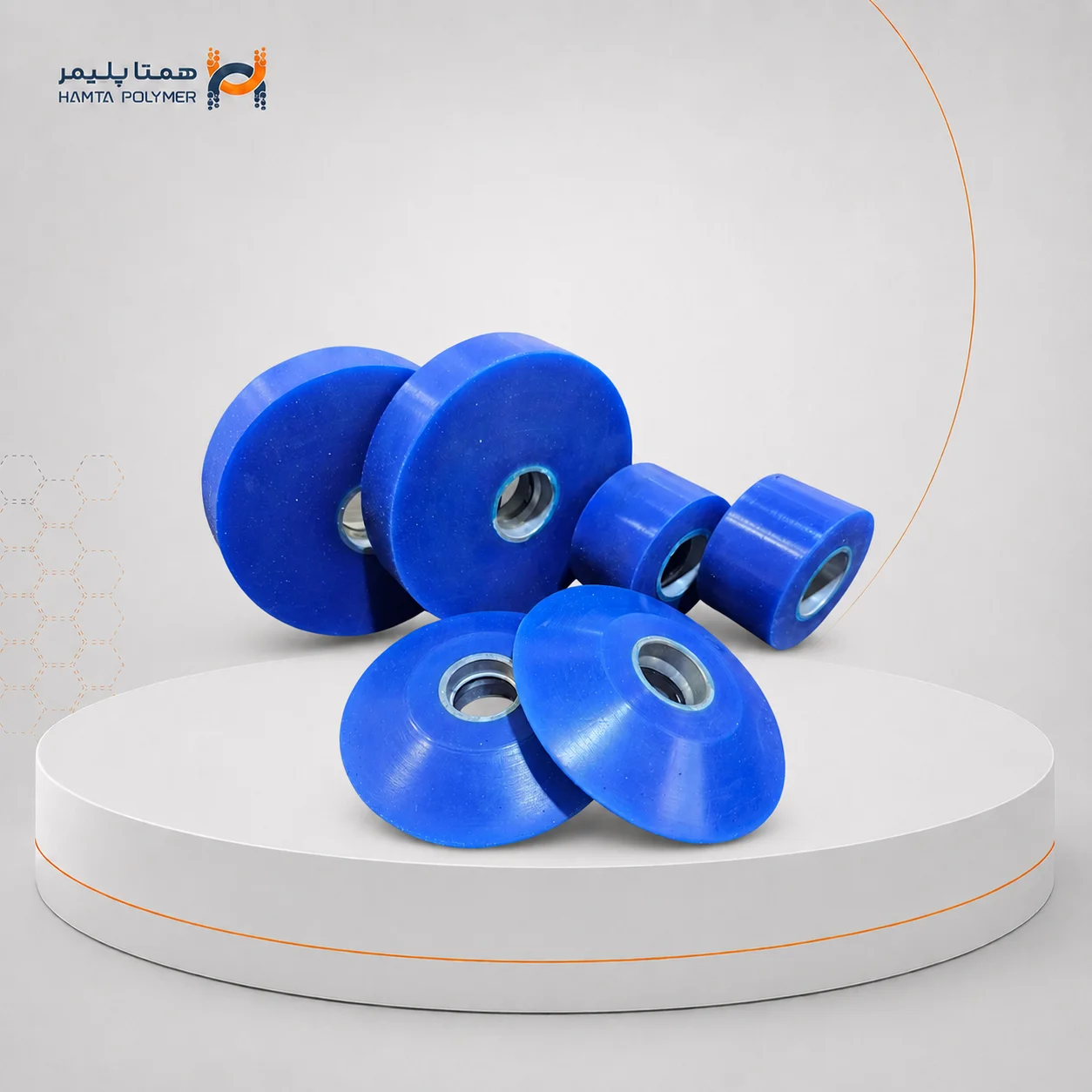 Conveyor Rollers
Conveyor Rubber Roller
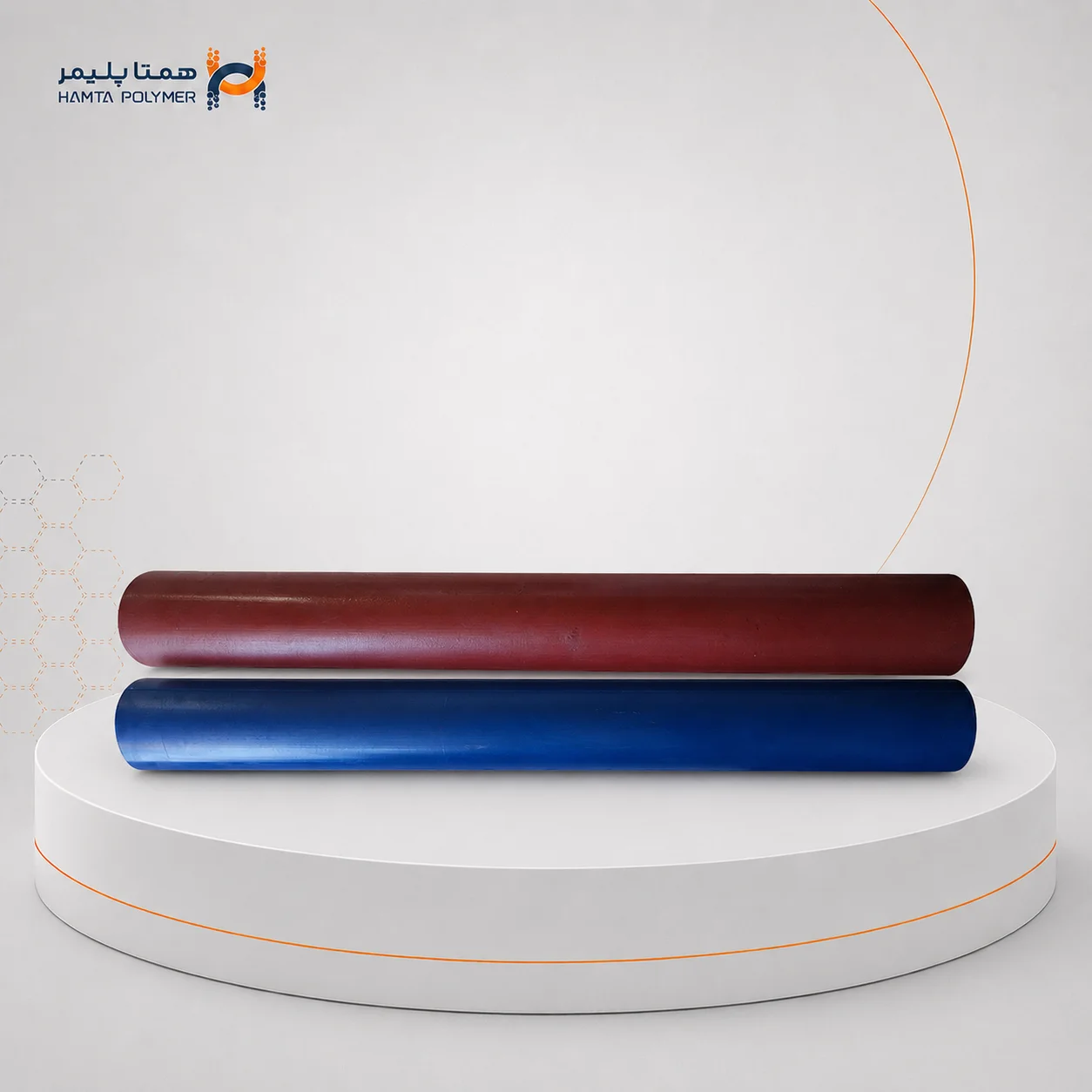 Conveyor Rollers
Industrial Polyurethane Roller
A conveyor roller is a steel core with a rubber or polyurethane cover that drives, guides or tensions a belt. Hamta Polymer manufactures and re-covers rollers from 30 to 200 mm diameter and up to 2,000 mm length — rubber for grip and shock absorption, PU for abrasive, heavy-duty lines.
A conveyor roller is a cylindrical assembly — typically a steel core with a rubber or polyurethane cover — used to drive, guide or tension a belt. The cover material directly controls friction, wear and roller service life.
Rubber covers generally provide shock absorption and reliable grip; polyurethane is evaluated where abrasion and heavier loads dominate. The final choice is reconciled with line speed, material type, roller diameter, bearings and environment.
Hamta Polymer manufactures and re-covers conveyor rollers to order, matching lagging thickness and hardness to the real duty of your line.
Where Conveyor Rollers are used across industries
Production and packaging lines
Product guidance and transfer on light-duty conveyor lines where smooth handling matters.
Mining and heavy industry
PU-covered rollers carrying abrasive metallic materials under continuous heavy loads.
Warehousing and logistics
Belt-guiding rollers in material-handling systems inside distribution centers.
Quality assurance for Conveyor Rollers
Dynamic balance test
Cover-to-core bond peel test
Lagging hardness measurement (Shore A/D)
Concentricity and bearing seat inspection
Common failure patterns in Conveyor Rollers
Rapid surface wear
Cause: Unsuitable cover material, or load/speed beyond the design
Fix: Review cover compound, hardness and actual loading conditions
Cover delamination
Cause: Insufficient surface preparation or adhesive/compound mismatch
Fix: Re-prepare the surface and review the bonding process
Vibration during rotation
Cause: Lost dynamic balance or bearing-seat runout
Fix: Re-balance, correct concentricity and replace damaged bearings
How our Conveyor Rollers are produced
- 1
Recording of diameter, length, shaft type, bearings, speed and load conditions
- 2
Selection of cover material and hardness against abrasion, impact and oil/water contact
- 3
Surface preparation of the core followed by lagging or bonding per the manufacturing route
- 4
Final machining of the diameter and concentricity correction
- 5
Verification of rotation, dimensions and balance against the order's acceptance criteria
For engineers and technical buyers — product types, the full material matrix and a precise selection guide.
Conveyor Rollers types available from Hamta Polymer
Rubber-lagged conveyor roller
An NR or SBR cover vulcanized to a steel core; shock absorption and dependable grip for general material handling on belt conveyors.
Industrial polyurethane (PU) roller
A PU cover with higher abrasion and cut resistance than ordinary rubber — the option for heavy loads, abrasive materials and mining environments.
Re-coverable / re-laggable roller
Rollers with replaceable covers or custom lagging thickness, sized against the line's load and speed so worn covers can be renewed without replacing the core.
Full engineering material matrix for Conveyor Rollers
A compound selection guide based on operating temperature, fluid type and mechanical demand — for industrial orders, match the material to the real service conditions.
| Compound | Operating temperature range | Fluid resistance | Key mechanical property |
|---|---|---|---|
| NR + steel core | −20 to +80 °C (industry reference) | Water; low oil resistance | Shock absorption and grip for general-purpose conveying |
| SBR + steel core | −20 to +80 °C (industry reference) | Water; low oil resistance | Economical abrasion resistance for general production lines |
| Polyurethane (PU) | −30 to +80 °C (industry reference) | Good resistance to oils and many solvents | Highest abrasion and cut resistance; suited to heavy loads and abrasive media |
The listed ranges are general material selection guides; final service conditions must be reconciled with the fluid type, pressure, part geometry and order specifications.
How to choose the right Conveyor Rollers
To choose the right roller, define: load class (light/heavy); the conveyed material and its abrasiveness; line speed; and the required diameter/length including shaft details. For light general duty a rubber cover is usually sufficient and more economical; for heavy loads or abrasive media such as mining, polyurethane delivers longer expected life. For an exact quote, send the engineering drawing or a physical sample of an old roller.
Frequently asked questions about Conveyor Rollers
Rubber gives better shock absorption and grip for general duty; polyurethane offers superior abrasion and cut resistance and lasts longer under abrasive materials and heavy loads.
Record the covered diameter, overall roller length, shaft diameter and length, bearing type and mounting position. Sending the drawing or the old roller itself is the fastest route to an exact match.
Yes — lagging thickness and hardness are set against your line's load and speed; coordinate exact specifications with our technical team.
Yes. Sound cores can be stripped, re-prepared and re-lagged to the original or revised specification — usually far cheaper than a new roller.
Diameter, length, shaft/sleeve details, load, speed, quantity and the operating environment.
Other categories
The full rubber and polymer product range
Industrial O-Rings
7 products
Rubber Packing & Gaskets
7 products
Rubber Diaphragms
8 products
Shock & Vibration Dampers
8 products
Rubber Strips & Extruded Profiles
6 products
Silicone Rubber Parts
13 products
Flexible Rubber Couplings
4 products
Rubber Dust Boots & Bellows
2 products
Bonded Rubber-Metal Parts
6 products
Miscellaneous Industrial Rubber Parts
10 products
Valve Rubber Components
2 products
Rubber Expansion Joints
1 products
Medical & Lab Equipment Parts
5 products
Ready to order Conveyor Rollers?
Send us the dimensions, a drawing or a worn-out sample together with your media, temperature and pressure — our engineering team will come back with the fastest possible quotation and lead time.