
Flexible Rubber Couplings
Flexible, jaw-type and tire-style rubber couplings for shaft connection and machinery vibration absorption — torque, speed and misalignment matched.
Product samples Flexible Rubber Couplings
Click any product to view a larger photo with dimensions and compound.
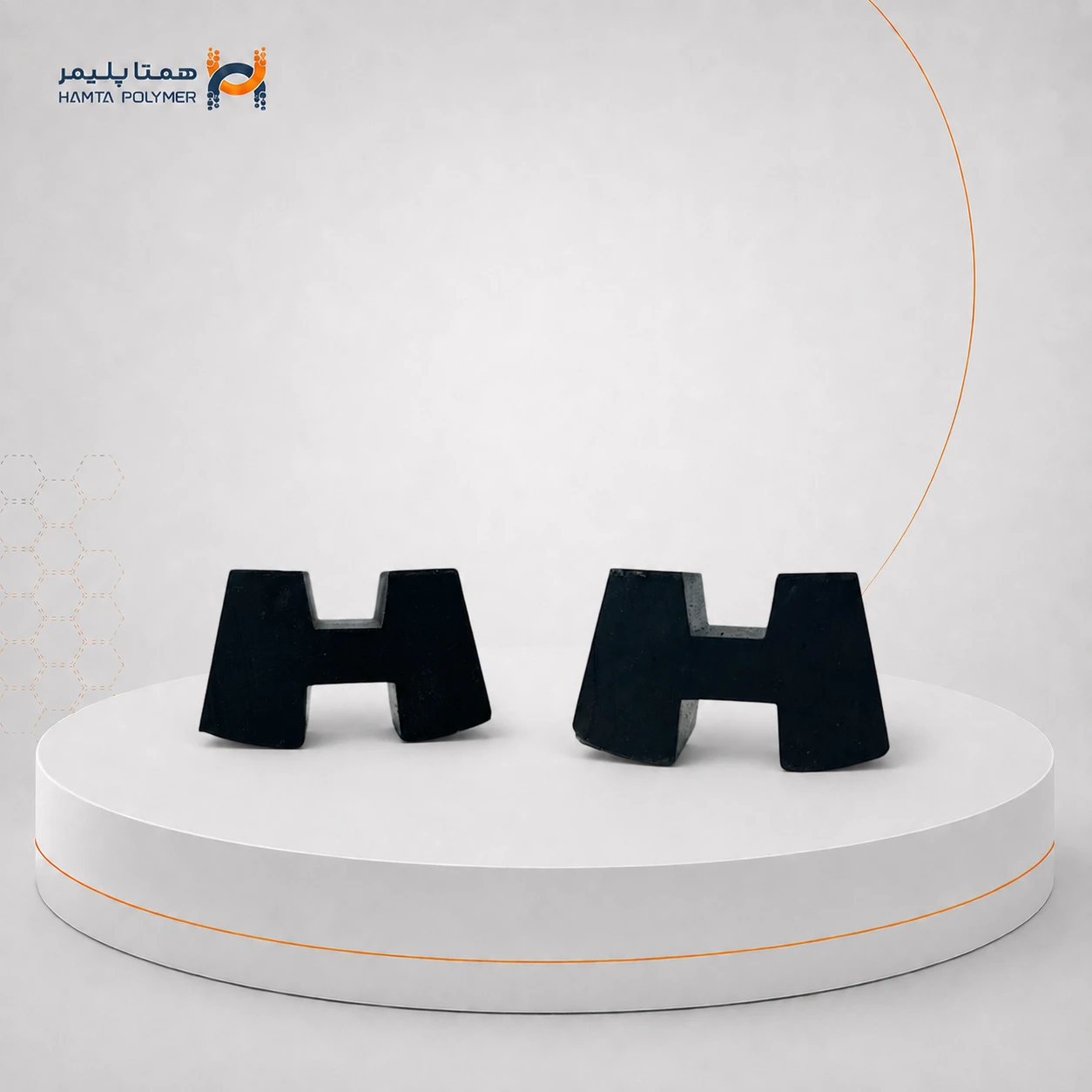 Flexible Rubber Couplings
Flexible Jaw Coupling Element
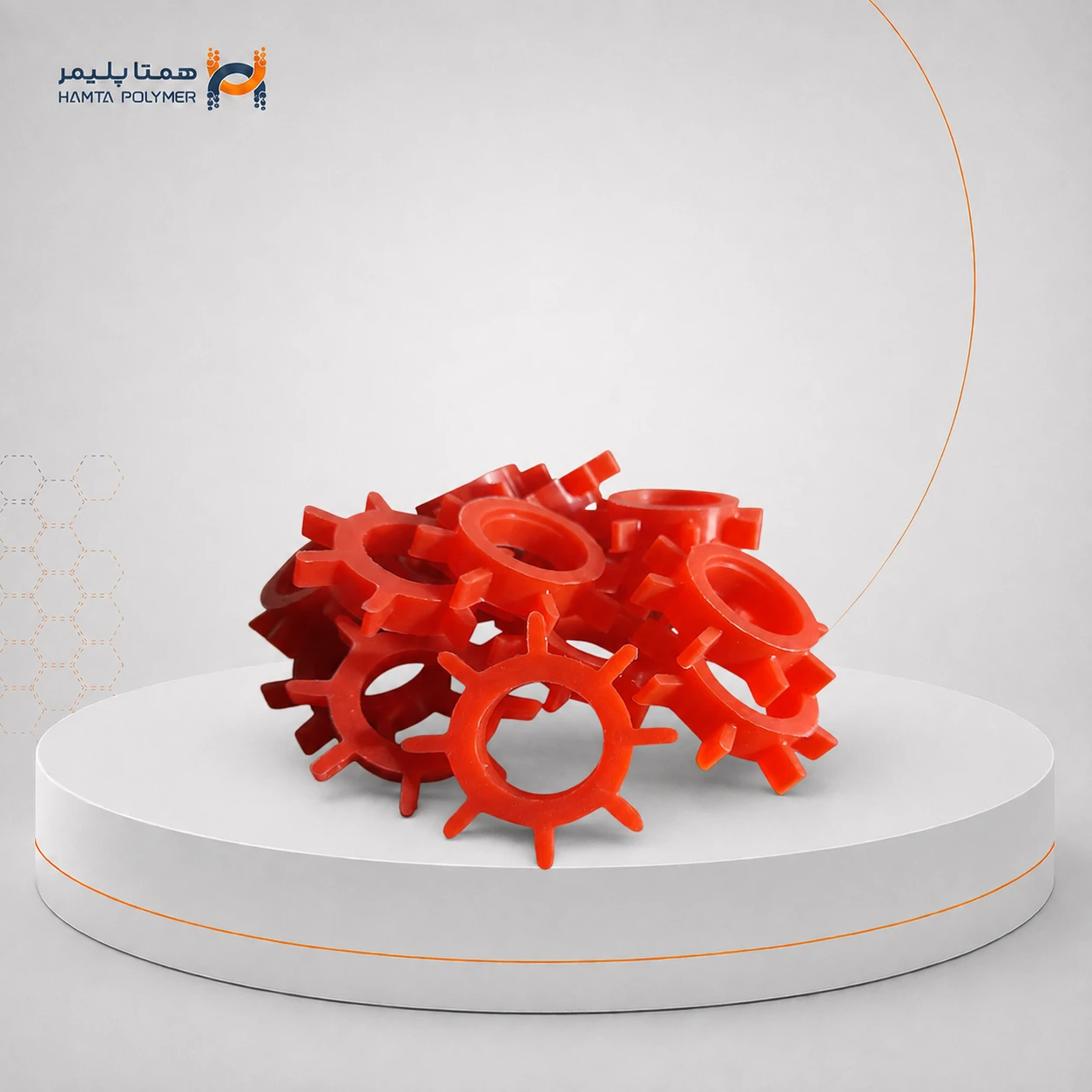 Flexible Rubber Couplings
Jaw Coupling Spider Insert
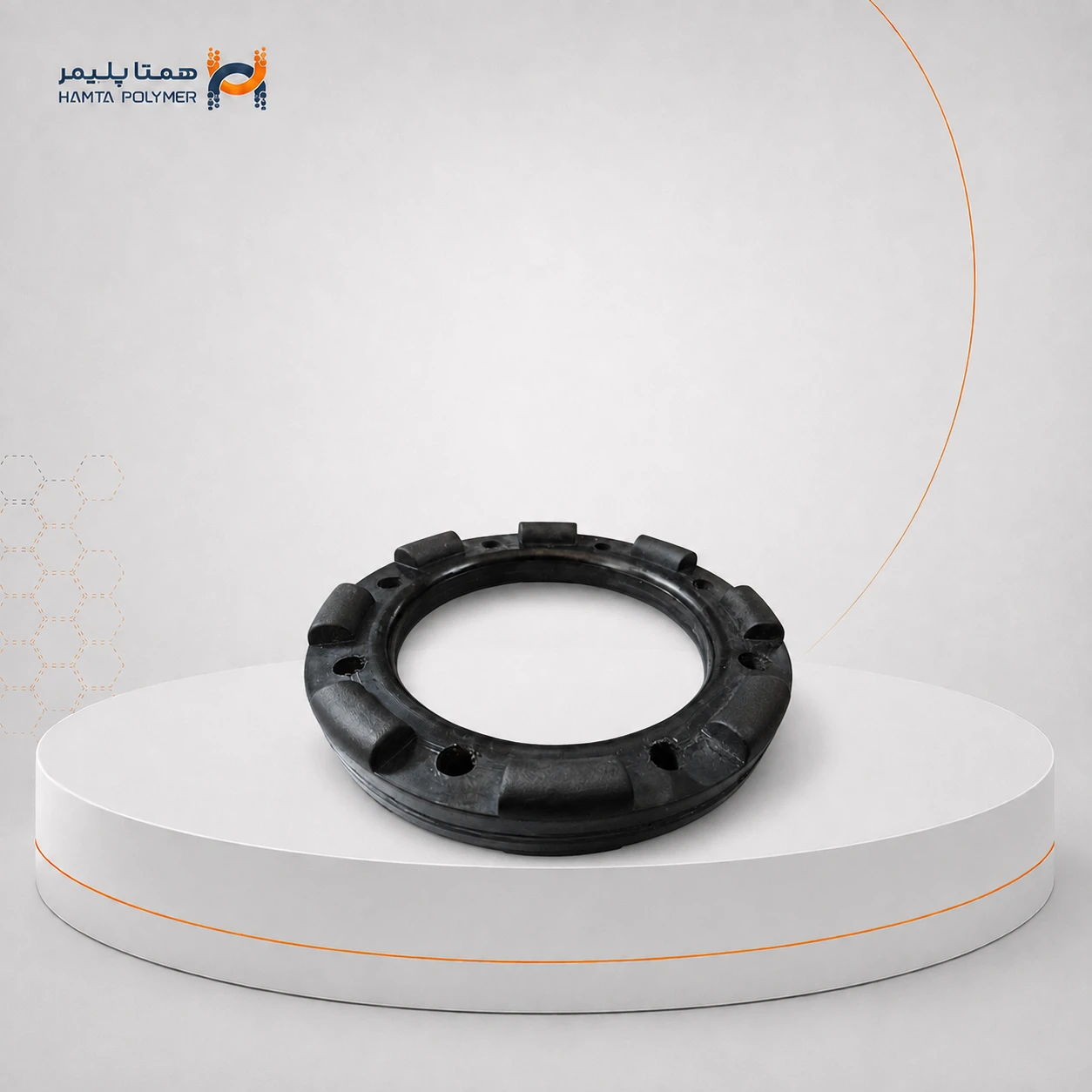 Flexible Rubber Couplings
Tire-Type Flexible Coupling
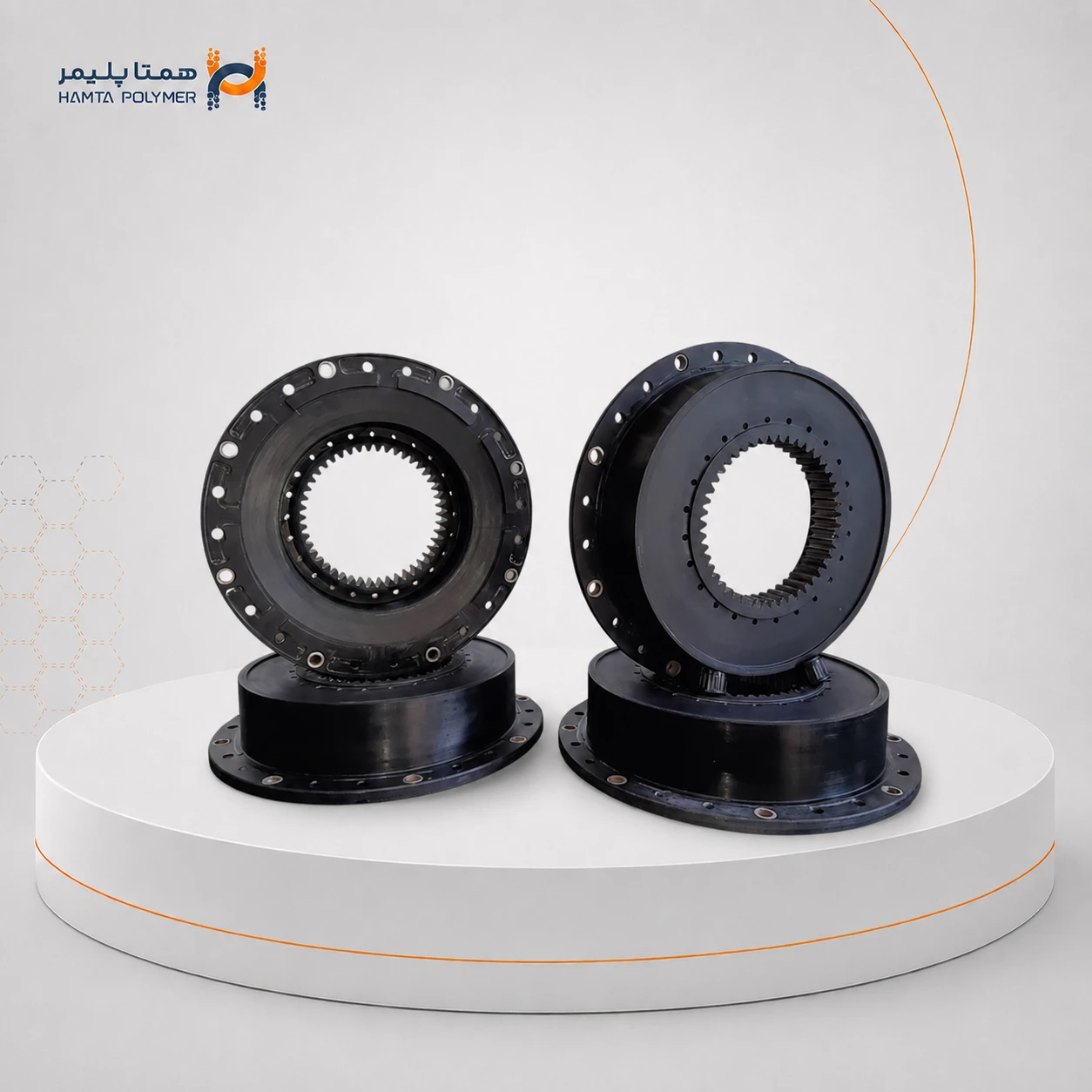 Flexible Rubber Couplings
Metal-Rubber Diaphragm Coupling
A flexible rubber coupling connects a motor shaft to its load, transmitting torque while absorbing shock and compensating shaft misalignment. Hamta Polymer makes jaw spider inserts, tire-type elements and disc couplings in NR, NBR and PU — sized from your torque, RPM and misalignment data.
A rubber coupling is the flexible link between a drive shaft and its load — pump, gearbox or fan. It absorbs shock loads, tolerates a defined amount of shaft misalignment and transmits torque reliably.
Hamta Polymer produces star (spider), tire-type and disc-style elastomeric couplings; type, material and hardness must be chosen against torque, rotational speed, start-stop frequency and the operating environment.
Where Flexible Rubber Couplings are used across industries
Pumps
Flexible motor-to-pump connection absorbing vibration from continuous operation.
Industrial gearboxes
Torque transfer from motor to gearbox while compensating installation misalignment.
Elevators
Disc-type couplings transmitting traction-motor torque precisely.
Mining machinery
Metal-rubber diaphragm couplings for high torque and shock loads.
Compressors and industrial fans
Reducing vibration transmitted into the foundation and extending bearing life.
Quality assurance for Flexible Rubber Couplings
Torque transmission test
Dynamic balance test
Shore A hardness measurement(ASTM D2240)
Compression set(ASTM D395)
Tensile strength and elongation at break(ASTM D412)
Common failure patterns in Flexible Rubber Couplings
Spider element cracking
Cause: Torque beyond rating, frequent hard starts, or compound unsuited to the environment
Fix: Re-rate the coupling against real torque/duty and re-select the compound
Abnormal vibration during running
Cause: Worn element increasing backlash, or lost dynamic balance at high RPM
Fix: Replace the element and re-balance the assembly
Excessive element wear at jaw contact faces
Cause: Misalignment beyond specification or continuous overload
Fix: Correct shaft alignment and verify coupling size selection
How our Flexible Rubber Couplings are produced
- 1
Receipt of technical specs (torque, RPM, expected misalignment) or physical sample analysis
- 2
Calculation of size and hardness from motor power and duty conditions
- 3
Mold design or adaptation by coupling type (spider / tire / disc)
- 4
First-article cure plus torque and dynamic-balance testing
- 5
Final customer approval, then mass production with per-batch quality control
For engineers and technical buyers — product types, the full material matrix and a precise selection guide.
Flexible Rubber Couplings types available from Hamta Polymer
Tire-type coupling
A tire-shaped elastomeric body delivering the highest shock absorption and greatest angular misalignment compensation of all coupling types — suited to impact-loaded machinery.
Jaw / spider coupling
Two metallic jaw flanges with an elastomeric spider insert between them; easy to install and replace, and the most common type on industrial pumps and motors.
Disc-type elastomeric coupling
Transmits higher torques with greater precision and less misalignment allowance than tire types — a good fit for industrial gearboxes and elevators.
Metal-rubber diaphragm coupling
An elastomeric layer combined with metal reinforcement transmits high torque while still absorbing vibration — built for heavy mining and industrial duty.
Polyurethane (PU) spider
Higher hardness and abrasion resistance than ordinary rubber for high-speed rotation and continuous duty; the durable choice for continuously running machines.
Full engineering material matrix for Flexible Rubber Couplings
A compound selection guide based on operating temperature, fluid type and mechanical demand — for industrial orders, match the material to the real service conditions.
| Compound | Operating temperature range | Fluid resistance | Key mechanical property |
|---|---|---|---|
| NR (Natural Rubber) | −20 to +80 °C | Low oil resistance; best in dry environments | The highest shock and vibration absorption among common coupling compounds |
| NBR (Nitrile) | −40 to +120 °C | Mineral oils and greases | Better dimensional stability than NR in oily environments |
| Polyurethane (PU) | −20 to +80 °C | High abrasion and oil resistance | Higher hardness and wear life; suited to high-speed, continuous heavy duty |
The listed ranges are general material selection guides; final service conditions must be reconciled with the fluid type, pressure, part geometry and order specifications.
How to choose the right Flexible Rubber Couplings
Choose your coupling around four factors: (1) motor working torque (N·m); (2) rotational speed (RPM) and duty type (continuous/intermittent); (3) expected misalignment between the two shafts (parallel/angular); (4) environment (oily, dusty, hot) for material selection. As a rule, lower hardness absorbs more shock while higher hardness improves torque-transmission accuracy — base the decision on actual torque and operating frequency.
Frequently asked questions about Flexible Rubber Couplings
Depending on type, typically around 5 degrees of angular misalignment plus a limited parallel offset. Tire-type couplings usually offer the highest compensation.
Watch for cracking or surface tearing of the rubber body, abnormal vibration during operation, and visibly accelerated wear on the metal-contact surfaces.
Lower hardness absorbs more shock — right for impact loads. Higher hardness transmits torque more precisely — right for precision drives such as elevators.
PU resists abrasion better and tolerates higher rotational speeds, making it the more durable option for continuously running, long-duty applications.
Yes. Send the worn element — we reverse-engineer dimensions and hardness, confirm them against your motor's power and RPM, then mold a first article.
Other categories
The full rubber and polymer product range
Industrial O-Rings
7 products
Rubber Packing & Gaskets
7 products
Rubber Diaphragms
8 products
Conveyor Rollers
2 products
Shock & Vibration Dampers
8 products
Rubber Strips & Extruded Profiles
6 products
Silicone Rubber Parts
13 products
Rubber Dust Boots & Bellows
2 products
Bonded Rubber-Metal Parts
6 products
Miscellaneous Industrial Rubber Parts
10 products
Valve Rubber Components
2 products
Rubber Expansion Joints
1 products
Medical & Lab Equipment Parts
5 products
Ready to order Flexible Rubber Couplings?
Send us the dimensions, a drawing or a worn-out sample together with your media, temperature and pressure — our engineering team will come back with the fastest possible quotation and lead time.