
Rubber Strips & Extruded Profiles
Extruded rubber strips and profiles made to your cross-section, length and installation conditions — waterstops, solid, hollow and sponge sections for dams, canals, facades and containers.
Product samples Rubber Strips & Extruded Profiles
Click any product to view a larger photo with dimensions and compound.
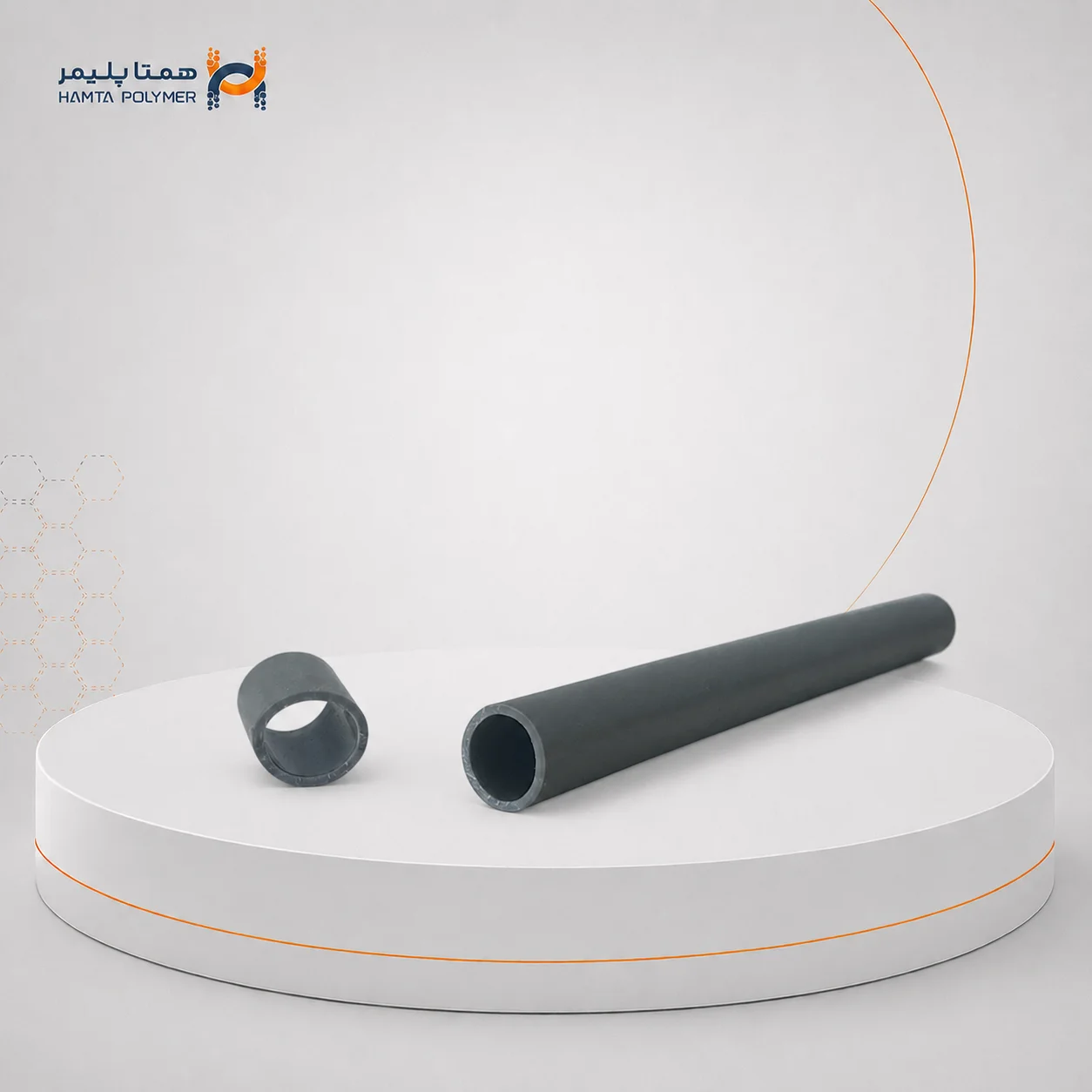 Rubber Strips & Extruded Profiles
Custom Solid Rubber Strip
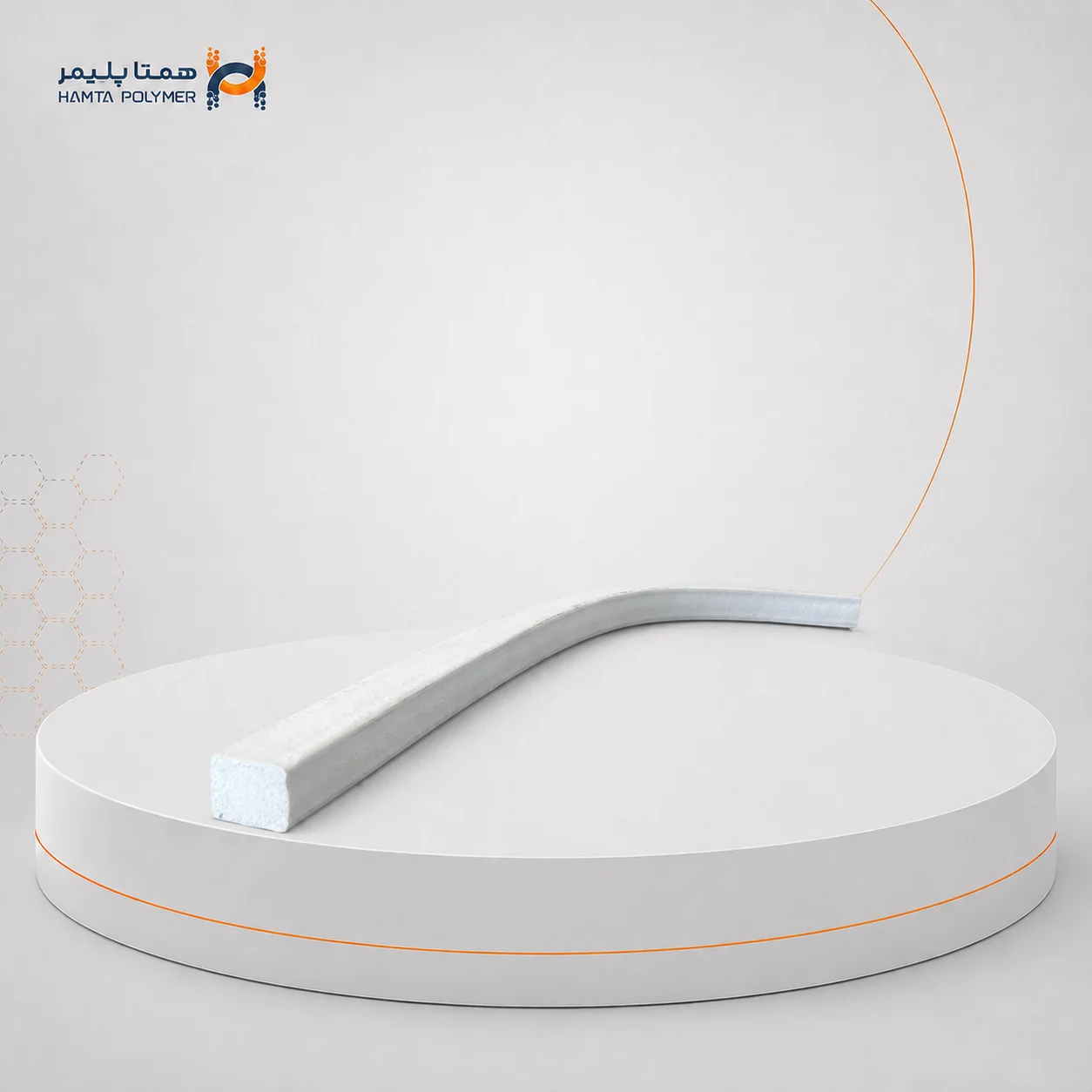 Rubber Strips & Extruded Profiles
Sealing Rubber Profile
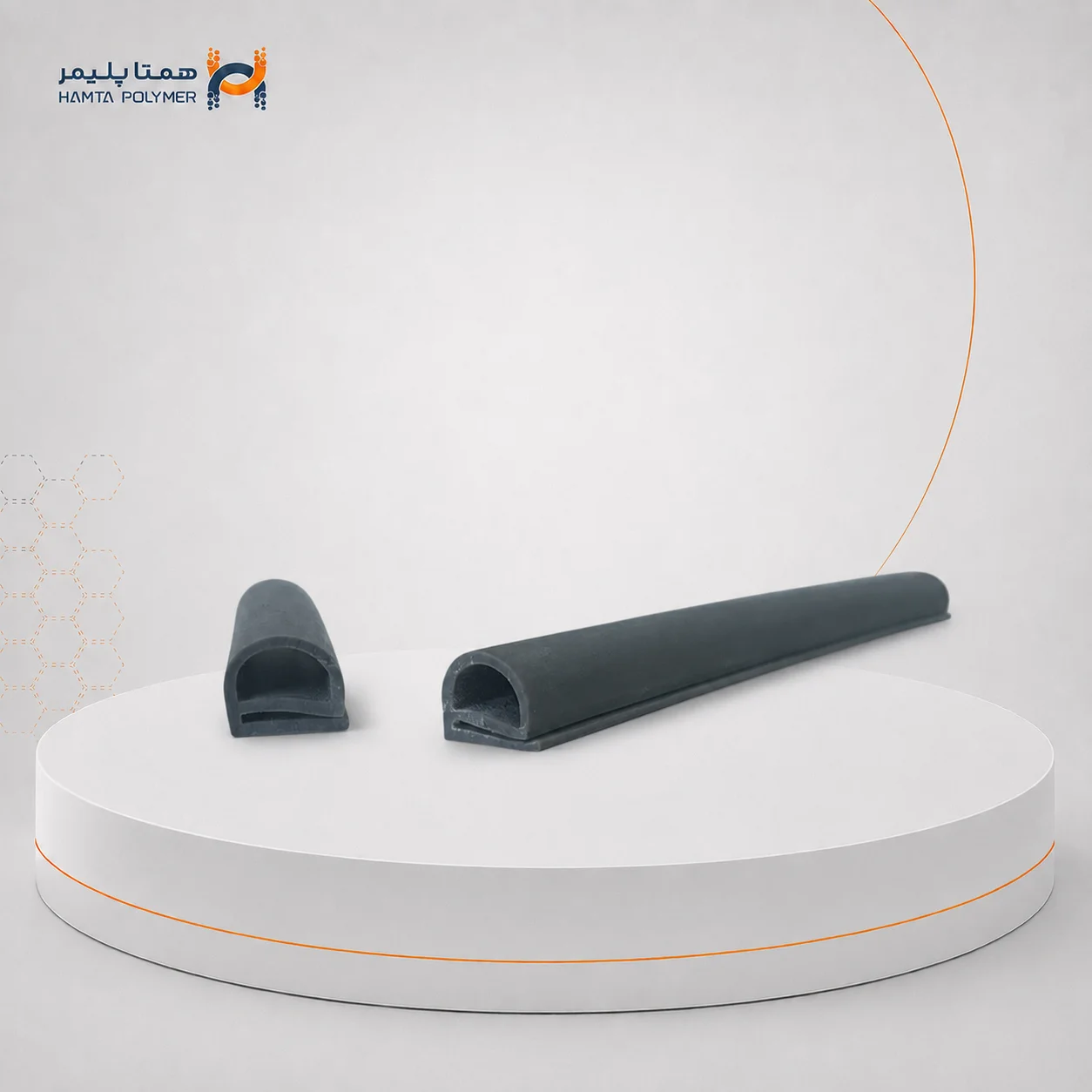 Rubber Strips & Extruded Profiles
Profiled Rubber Strip
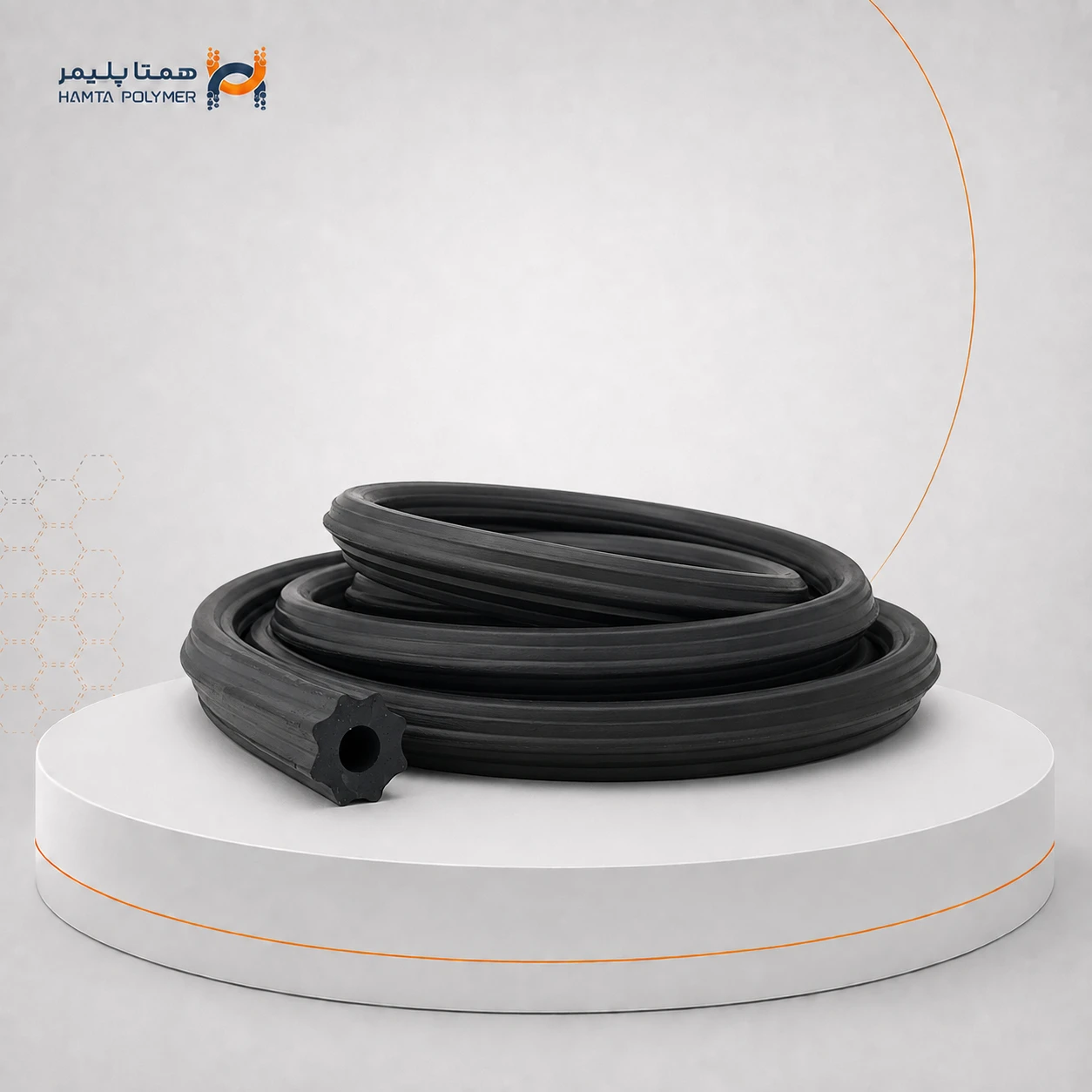 Rubber Strips & Extruded Profiles
New Strip Sample 4
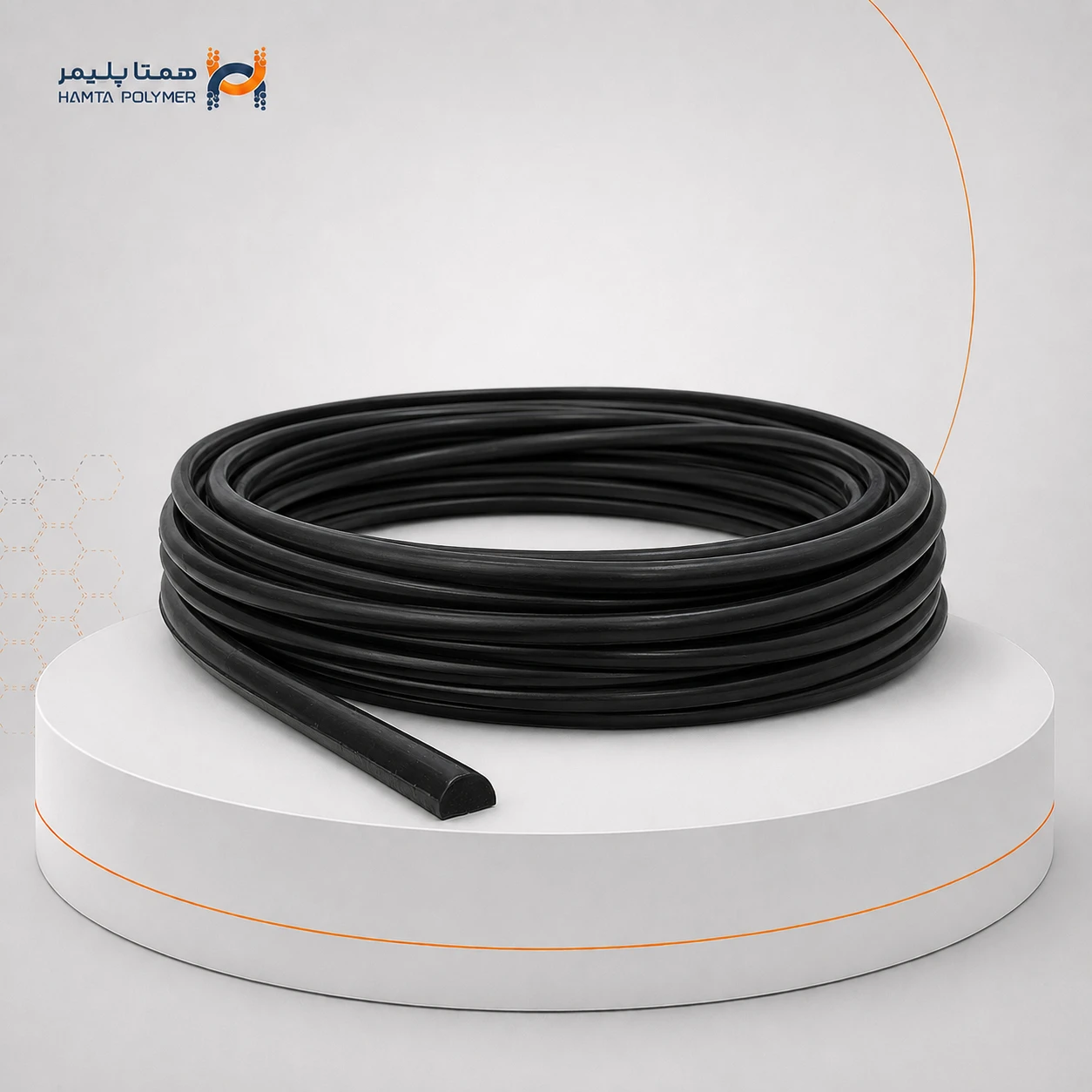 Rubber Strips & Extruded Profiles
New Profile Sample 5
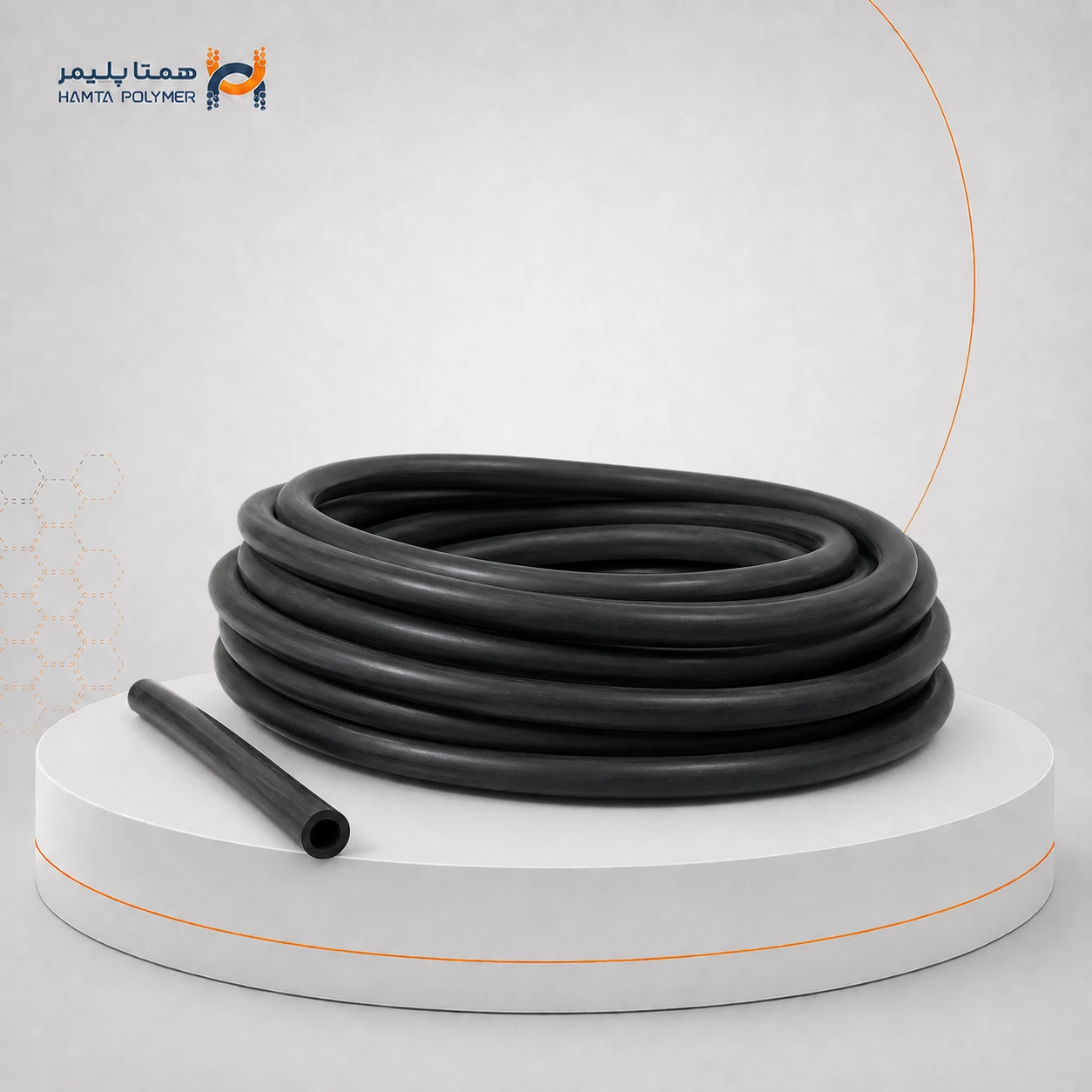 Rubber Strips & Extruded Profiles
New Strip Sample 6
Rubber strips and profiles are produced by extrusion: compound is pushed through a custom die into a continuous length. Hamta Polymer makes waterstops and solid, hollow, sponge or co-extruded profiles in EPDM, neoprene, silicone, NR and PVC — from your drawing or sample.
Longitudinal rubber strips and profiles are among the most widely used linear seals across construction, automotive, marine, rail and electrical enclosures. They are produced by extrusion: the compound is forced through a die with the target cross-section and emerges as a continuous length.
Hamta Polymer designs and manufactures the extrusion die from your drawing or sample — from simple U or D sections to multi-cavity and composite profiles. Materials span EPDM (UV and weathering resistant), silicone (high temperature), CR/neoprene, NR, PVC and TPE according to environment and temperature.
Where Rubber Strips & Extruded Profiles are used across industries
Concrete structures and joint sealing
Waterstops in construction and expansion joints of canals, tanks and diaphragm walls to stop water migration.
Construction and facades
Sealing of doors, windows, curtain-wall facades and sloped roofs.
Automotive
Strips around doors, trunks, glazing and roofs.
Marine, rail and electrical enclosures
Sealing of vessel hatches and cabins, carriage doors and windows, and IP-rated control panels.
Quality assurance for Rubber Strips & Extruded Profiles
Cross-section dimensional control (±0.3 mm)
Shore A hardness measurement(ASTM D2240)
Surface and cavity inspection
Tensile strength where required(ASTM D412)
Common failure patterns in Rubber Strips & Extruded Profiles
Profile does not fit the groove
Cause: Unaccounted shrinkage or a non-conforming die
Fix: Review compound shrinkage and re-cut the die or adjust the profile
Early cracking or hardening outdoors
Cause: A UV/ozone-resistant compound not used in an outdoor environment
Fix: Switch to EPDM or another weathering-grade compound
Leakage through a concrete joint
Cause: Incorrect waterstop installation or a section unsuited to the joint type
Fix: Review joint type (construction/expansion) and embedment method during casting
How our Rubber Strips & Extruded Profiles are produced
- 1
Receipt of 2D drawing or sample and registration of installation tolerances
- 2
Selection of solid, hollow, sponge or multi-material structure and definition of the compound
- 3
Die design and manufacture with material shrinkage taken into account
- 4
Sample production and inspection of section, hardness and fixing method
- 5
Sample approval, then continuous production delivered as rolls or straight lengths
For engineers and technical buyers — product types, the full material matrix and a precise selection guide.
Rubber Strips & Extruded Profiles types available from Hamta Polymer
Solid or hollow sections
From simple U and D shapes to multi-cavity profiles; hollow sections flex more and compress readily into gaps with varying tolerance — the classic choice for doors and windows.
Closed-cell sponge strip
A closed bubble structure that never wicks moisture; strong sealing against water, wind and noise for facades and IP-rated electrical enclosures.
Dual-material co-extrusion
Two materials or hardnesses extruded simultaneously into one profile — for example a rigid body for fixing plus a soft sealing lip — in a single pass.
Self-adhesive backed strip
Rubber strip with an industrial adhesive backing for fast, clean installation with no separate glue on the substrate.
Concrete waterstop
Cast into construction and expansion joints during pouring, blocking the water path through the concrete in dams, canals and tanks.
Full engineering material matrix for Rubber Strips & Extruded Profiles
A compound selection guide based on operating temperature, fluid type and mechanical demand — for industrial orders, match the material to the real service conditions.
| Compound | Operating temperature range | Fluid resistance | Key mechanical property |
|---|---|---|---|
| EPDM | −40 to +150 °C | Excellent UV, ozone and weathering resistance; low oil resistance | The default for outdoor strips, facades and curtain walls |
| CR (Neoprene) | −35 to +100 °C | Light mineral oils; good weathering resistance | Suited to sealing strips with partial oil contact or mechanical friction |
| NR (Natural Rubber) | −20 to +80 °C | Water; low resistance to oils and hydrocarbons | High elasticity; suited to general hollow and sponge sections |
| Silicone (VMQ) | −55 to +220 °C | Air and water steam; low oil/fuel resistance | For profiles that must survive high temperatures |
| PVC (liner grade) | −10 to +60 °C | Water; moderate chemical resistance | The most common waterstop material — economical with proven concrete performance |
The listed ranges are general material selection guides; final service conditions must be reconciled with the fluid type, pressure, part geometry and order specifications.
How to choose the right Rubber Strips & Extruded Profiles
To order a strip or profile, send a technical drawing (DXF/PDF) or a physical sample of the section; our team reviews the extrusion-die design. For existing dies, practical agreed lengths are fine; for new custom dies, plan a volume that justifies tooling cost. Choose the material by environment: EPDM for outdoor/UV duty, silicone for high heat, CR for partial oil contact, and PVC for economical waterstops.
Frequently asked questions about Rubber Strips & Extruded Profiles
It is cast into a construction or expansion joint during pouring. Its fins on both sides lengthen and block any potential seepage path through the joint. For dam projects with specific certification requirements, coordinate specifications with our technical experts early.
For existing profiles and dies we accept agreed practical lengths; for new custom profiles a larger volume is usually needed to justify the tooling cost.
Yes. Send a technical drawing or physical sample — our team designs a dedicated extrusion die, and after your approval produces a first-article sample before mass production.
Solid is stronger under mechanical and compressive loads for heavy-duty sealing; hollow is softer and more compliant, ideal for gaps with varying tolerance such as doors and windows.
EPDM is the standard answer thanks to its UV and ozone resistance. Silicone covers extreme heat, CR handles partial oil contact, and PVC remains the economical waterstop workhorse.
Other categories
The full rubber and polymer product range
Industrial O-Rings
7 products
Rubber Packing & Gaskets
7 products
Rubber Diaphragms
8 products
Conveyor Rollers
2 products
Shock & Vibration Dampers
8 products
Silicone Rubber Parts
13 products
Flexible Rubber Couplings
4 products
Rubber Dust Boots & Bellows
2 products
Bonded Rubber-Metal Parts
6 products
Miscellaneous Industrial Rubber Parts
10 products
Valve Rubber Components
2 products
Rubber Expansion Joints
1 products
Medical & Lab Equipment Parts
5 products
Ready to order Rubber Strips & Extruded Profiles?
Send us the dimensions, a drawing or a worn-out sample together with your media, temperature and pressure — our engineering team will come back with the fastest possible quotation and lead time.