
Bonded Rubber-Metal Parts
Vulcanized rubber-to-metal bonded parts — bushings, anti-vibration rings, metal-reinforced oil seals and engine mounts, chemically bonded to steel, aluminum, brass or stainless.
Product samples Bonded Rubber-Metal Parts
Click any product to view a larger photo with dimensions and compound.
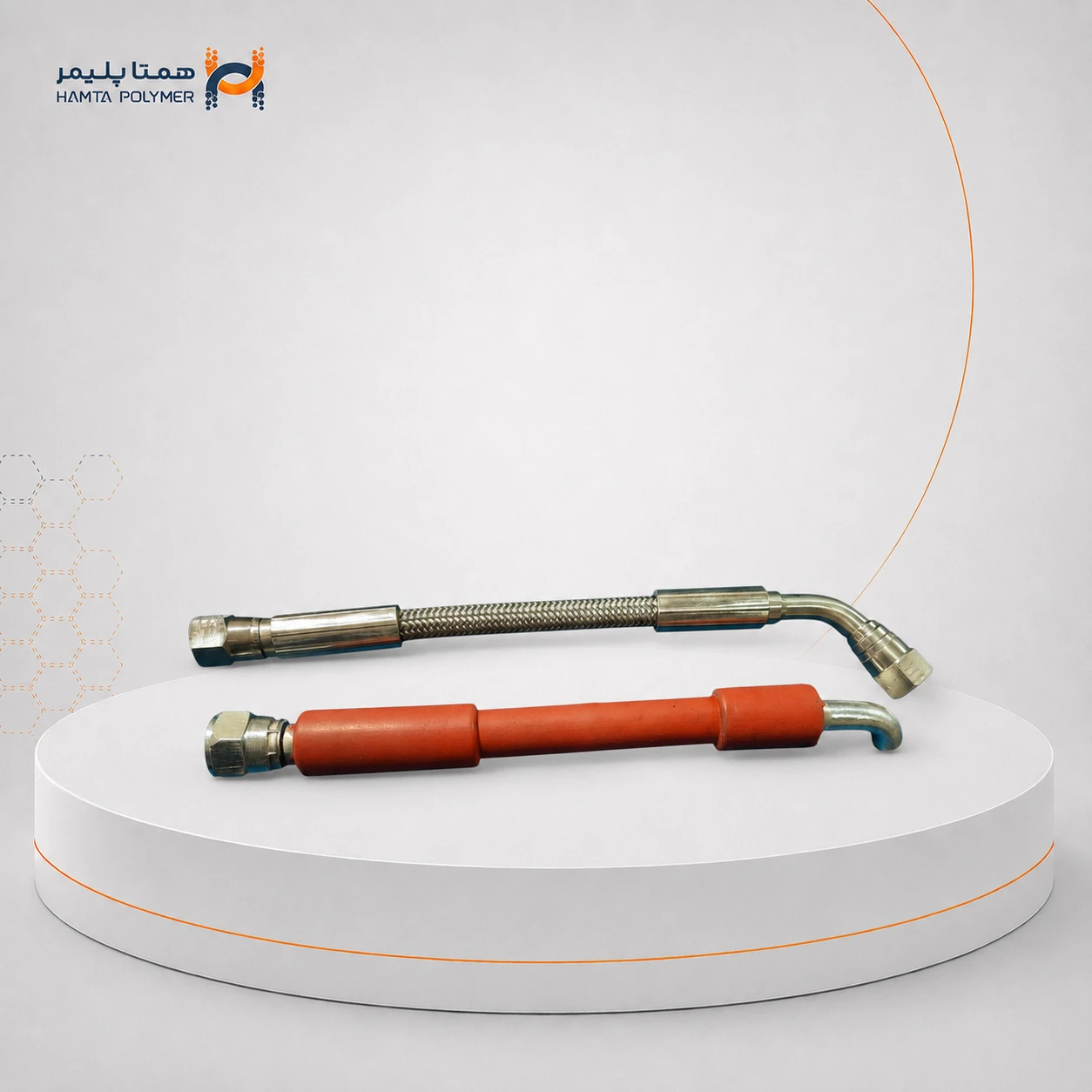 Bonded Rubber-Metal Parts
Suspension Rubber-Metal Bushing
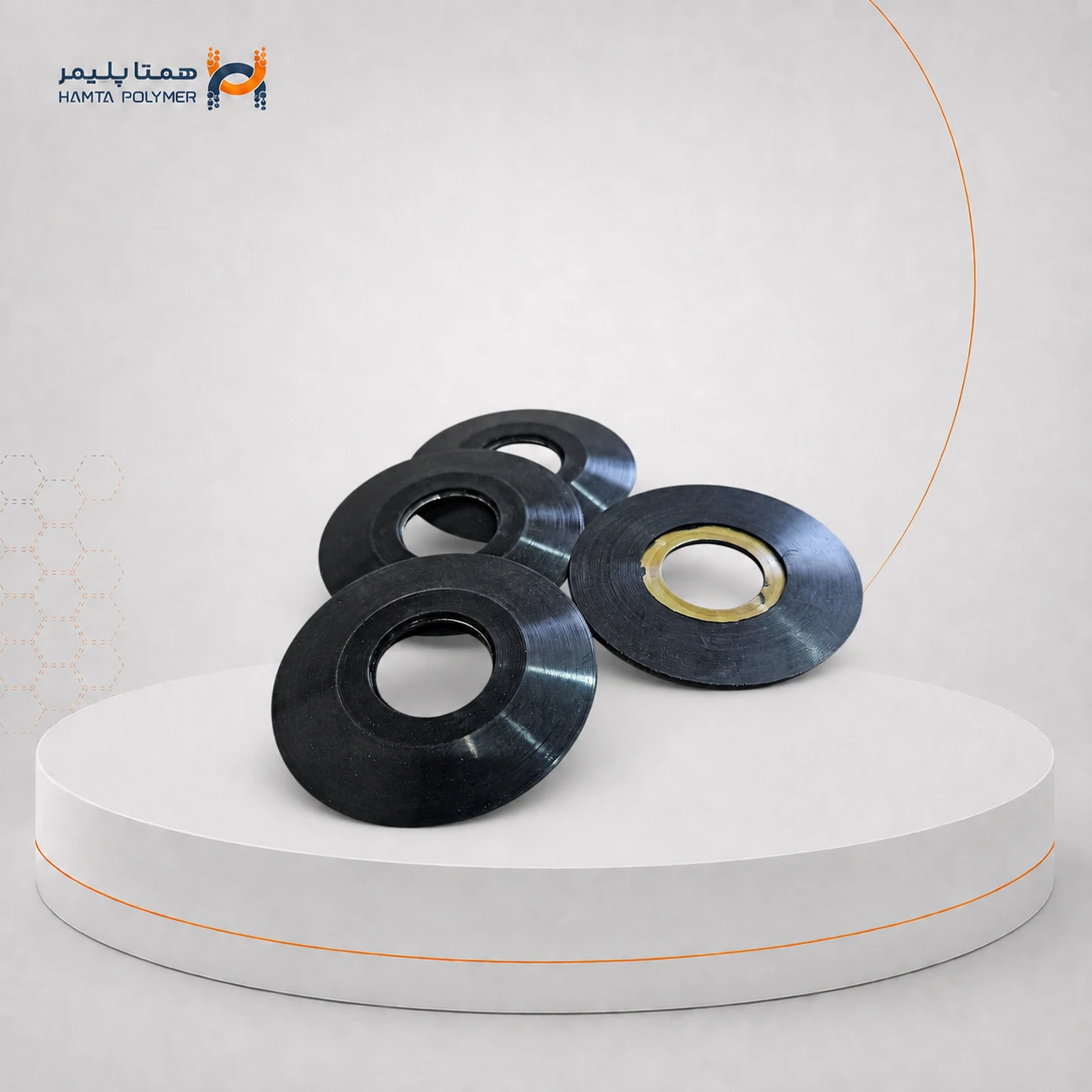 Bonded Rubber-Metal Parts
Machinery Anti-Vibration Ring
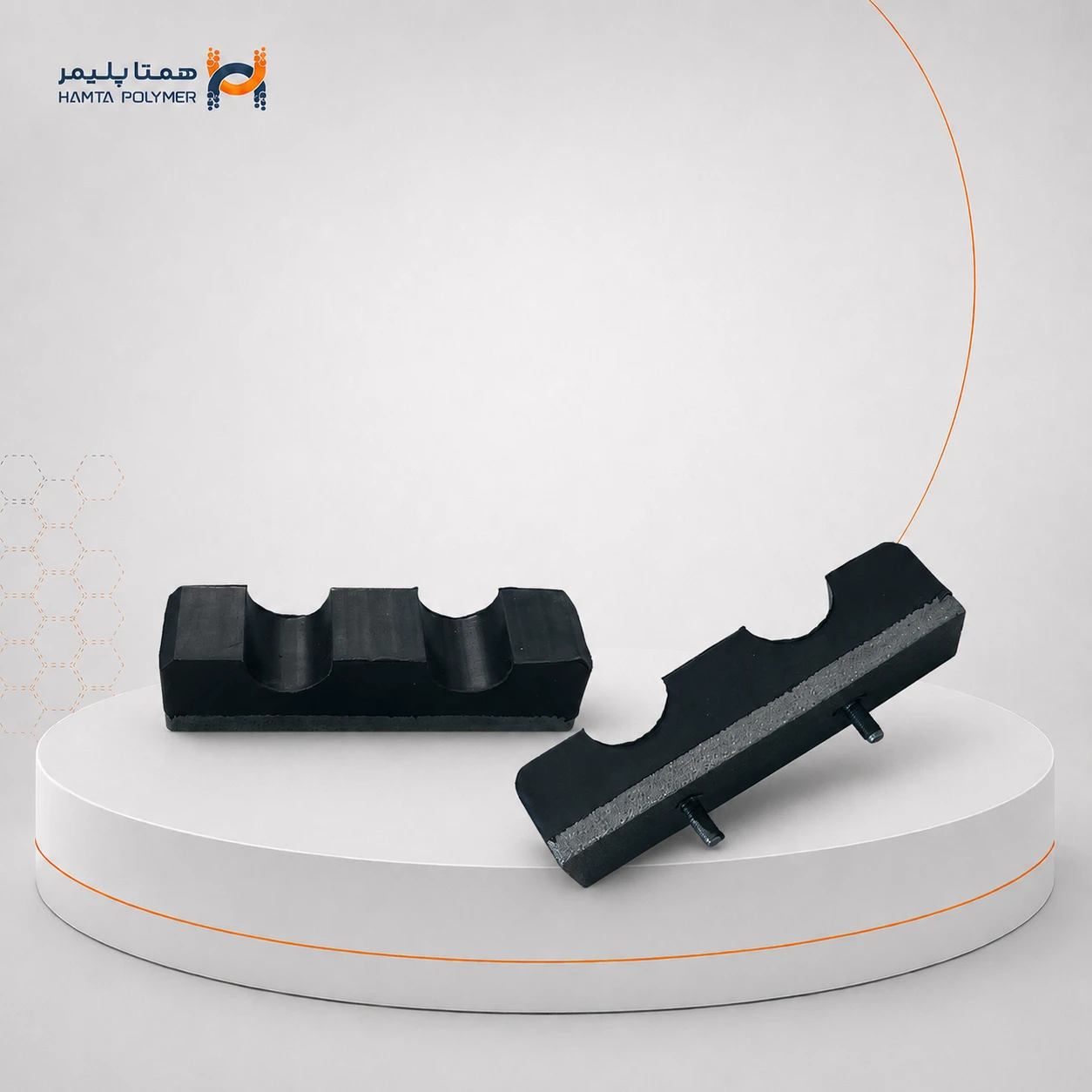 Bonded Rubber-Metal Parts
Conveyor Roller (Rubber-Metal)
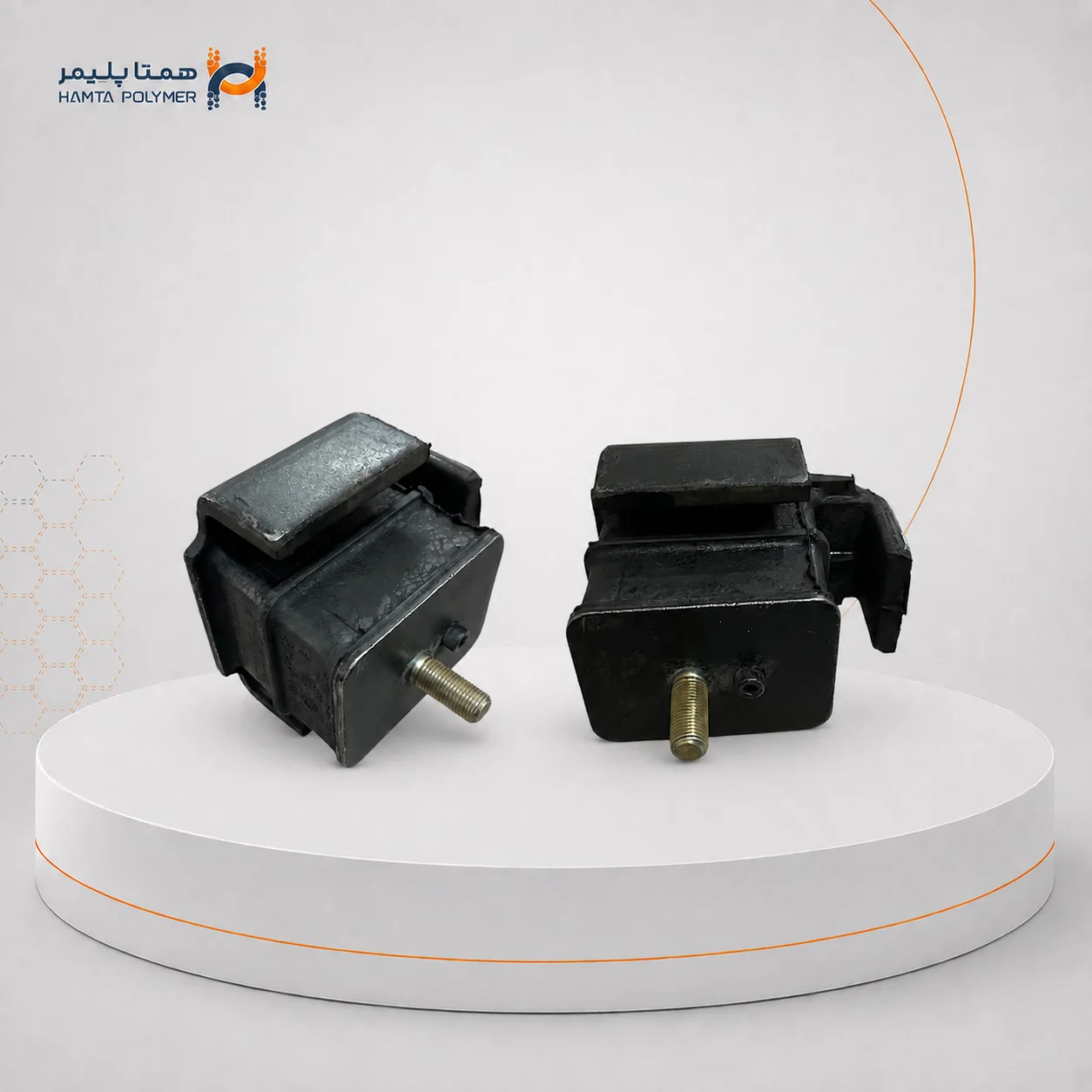 Bonded Rubber-Metal Parts
Engine Mount
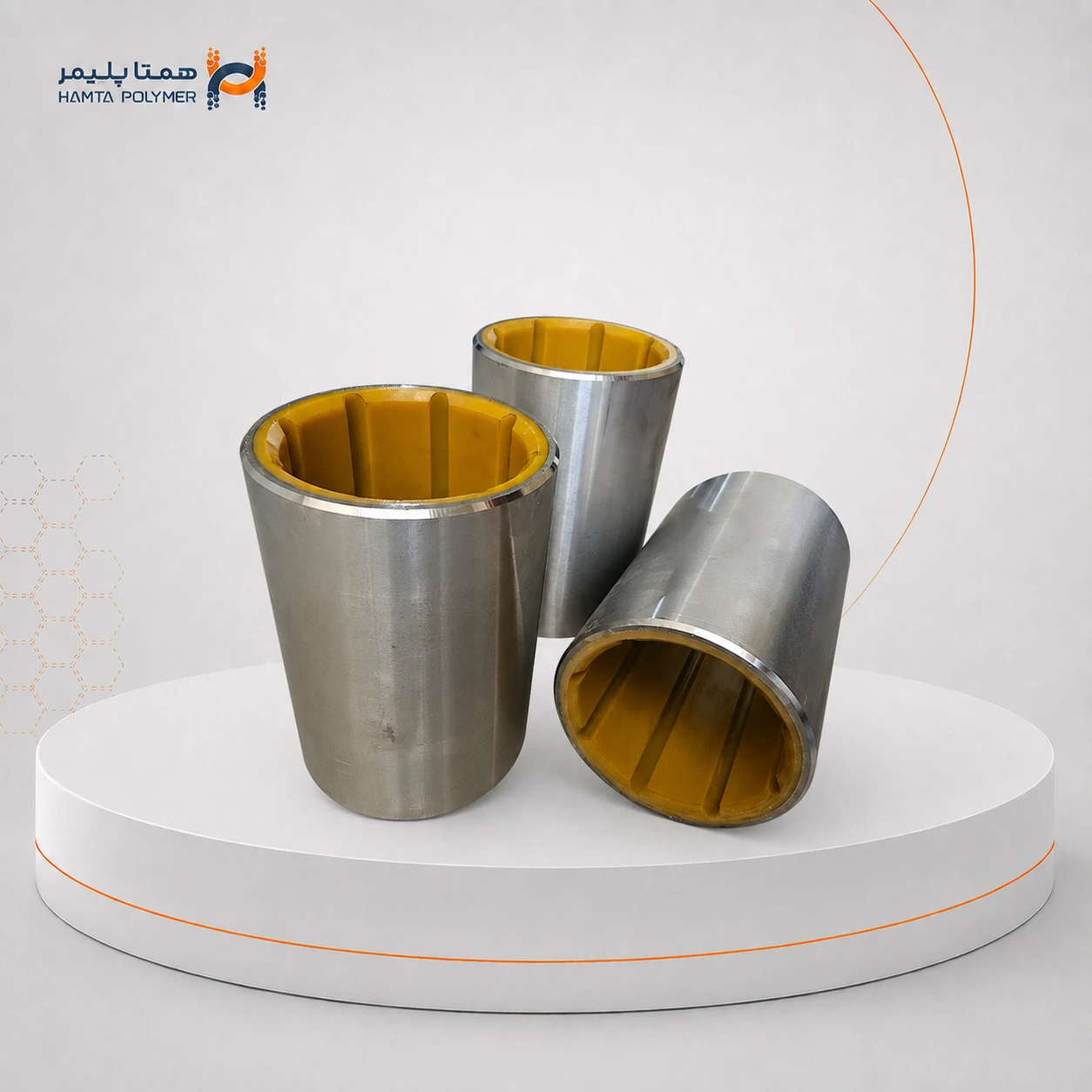 Bonded Rubber-Metal Parts
Metal-Reinforced Oil Seal
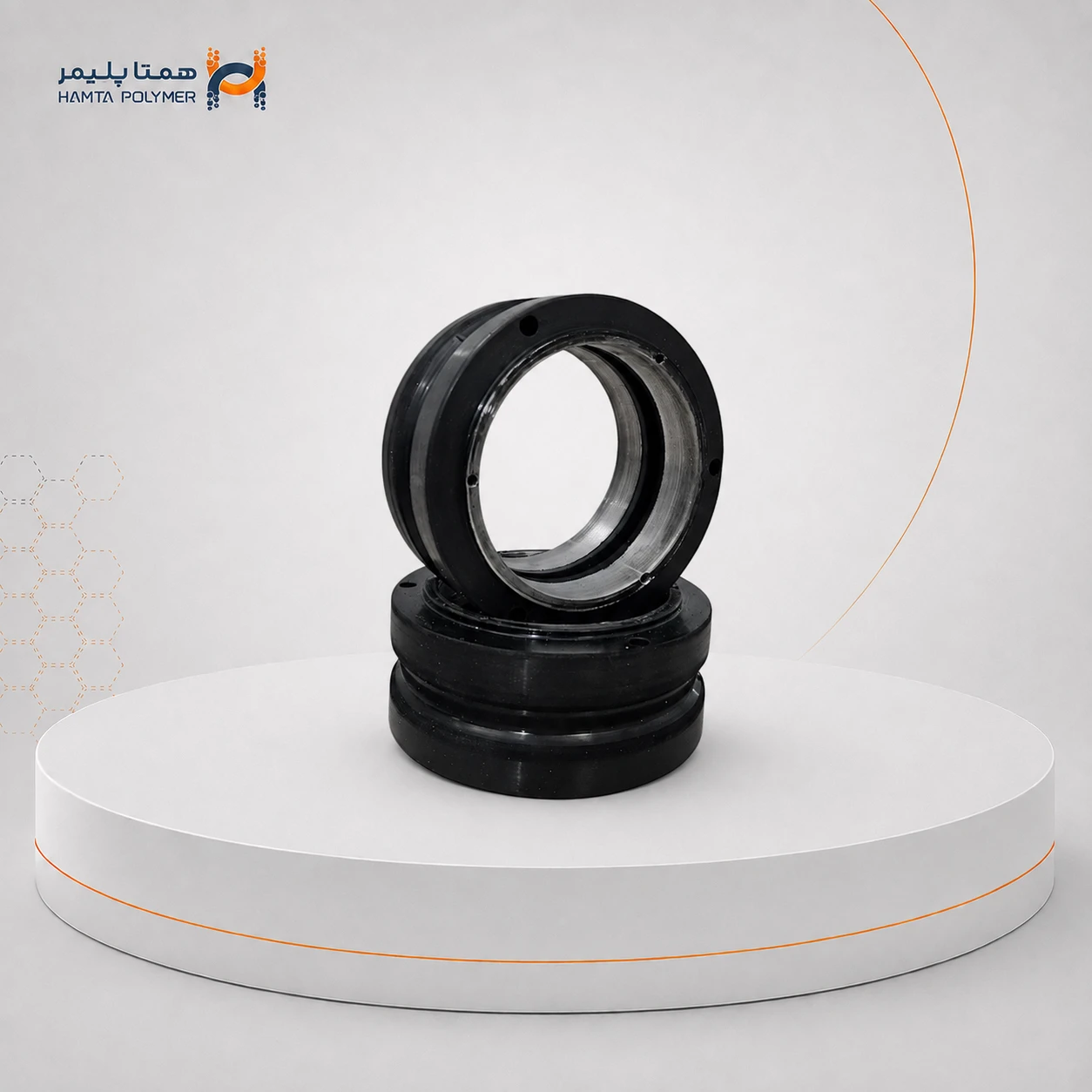 Bonded Rubber-Metal Parts
Shock-Absorbing Rubber-Metal Disc
A rubber-metal bonded part joins vulcanized rubber to a metal insert so one component delivers both elasticity and structural strength. Hamta Polymer bonds rubber chemically to steel, aluminum, brass or stainless — bushings, anti-vibration rings and reinforced oil seals verified by ASTM D429 peel testing.
Rubber-to-metal bonded parts join vulcanized rubber to a metal insert. Surface preparation, the bonding system, geometry design and cure conditions all determine final durability. In adhesion testing, tearing through the rubber body itself indicates a sound bond — but the acceptance criterion should always be defined in the drawing or the order's quality plan.
Hamta Polymer produces rubber-metal bushings, anti-vibration collars and metal-supported seals. This page focuses on chemical bonding and general industrial parts; engineered vibration-isolation elements are evaluated separately against load, deflection and operating frequency.
Where Bonded Rubber-Metal Parts are used across industries
Automotive
Suspension bushings and under-chassis anti-vibration links.
Railways
Carriage bushings and track-side anti-vibration connectors.
Industrial machinery
Bushings and AV collars at rotating and sliding connection points.
Mining
Liners and bushings in material-transfer systems of mining equipment.
Quality assurance for Bonded Rubber-Metal Parts
Peel/adhesion bond test(ASTM D429)
Pre-bond metal surface preparation control
Load test
Metal surface corrosion control
Common failure patterns in Bonded Rubber-Metal Parts
Debonding at the metal interface
Cause: Poor surface preparation, expired adhesive, or cure temperature/time outside the bonding window
Fix: Re-work preparation discipline and validate primer/adhesive batch and cure profile
Rubber body cracking under load
Cause: Load direction/magnitude beyond design, or compound fatigue in dynamic duty
Fix: Re-check load case and re-specify compound hardness or geometry
Corrosion creeping under the bond line
Cause: Missing anti-corrosion coating in wet/outdoor service
Fix: Add pre-bond anti-rust treatment and review environment suitability
How our Bonded Rubber-Metal Parts are produced
- 1
Receipt of drawing or sample; definition of metal type (steel/aluminum/brass/stainless) and compound for the load and environment
- 2
Metal surface preparation: grit blasting, degreasing and primer application with specialist adhesive systems (Chemosil / Cilbond)
- 3
Controlled molding and vulcanization creating the chemical bond between rubber and metal
- 4
Peel test on the first article to confirm the tear runs through the rubber body, not at the bonded interface
- 5
Sample approval plus adhesion/load tests per the agreed quality plan
For engineers and technical buyers — product types, the full material matrix and a precise selection guide.
Bonded Rubber-Metal Parts types available from Hamta Polymer
Suspension & machinery rubber-metal bushing
A bonded elastomeric cylinder between two metal walls absorbs radial load and reduces friction and wear at moving joints in machinery and vehicle suspension.
Industrial anti-vibration collar
A metal-bonded rubber ring reducing vibration transfer at bearing seats or rotating connections on industrial machines.
Metal-reinforced oil seal
A metal body with a bonded elastomeric lip sealing rotating shafts in gearboxes, pumps, differentials and bearings. Two main types: single-lip for simple oil retention, and double-lip (with dust lip) that adds a second lip blocking dust ingress. Both are available with an AISI 304 stainless garter spring for even lip pressure on the shaft, and with ground-finish lip treatment to cut friction and wear. To size correctly, record three micrometer values: shaft diameter, housing bore OD, and seal width/thickness — or simply send an old sample (even worn out). Suitable alternatives to European brands such as SKF, NOK, Freudenberg and Simrit.
Engine mounts, bearing pads & engineered sandwich isolators
For this family — which requires natural-frequency and static-load calculation of your system — see the dedicated Shock & Vibration Dampers page →
Rubber-metal conveyor rollers
For the full range of industrial conveyor rollers (rubber, polyurethane and lagged), see the dedicated Conveyor Rollers page →
Full engineering material matrix for Bonded Rubber-Metal Parts
A compound selection guide based on operating temperature, fluid type and mechanical demand — for industrial orders, match the material to the real service conditions.
| Compound | Operating temperature range | Fluid resistance | Key mechanical property |
|---|---|---|---|
| NR + steel | −30 to +80 °C | Low oil resistance; best in dry environments | Highest resilience; the common choice for suspension bushings and AV collars |
| NBR + aluminum | −40 to +120 °C | Mineral oils and greases | Lighter than steel; suited to weight-critical parts |
| CR + steel | −35 to +120 °C | Good ozone, weathering and diluted-oil resistance | Stable in outdoor installation and weathering conditions |
| EPDM + brass | −40 to +150 °C | Hot water and steam; not suitable for oils | Brass corrosion resistance suits wet or water-contact environments |
| Silicone + steel | −55 to +220 °C | Air and water steam | The extreme hot/cold option among bonded constructions |
The listed ranges are general material selection guides; final service conditions must be reconciled with the fluid type, pressure, part geometry and order specifications.
How to choose the right Bonded Rubber-Metal Parts
To order a custom bonded part, prepare: (1) required metal type (steel, aluminum, brass or stainless) based on corrosion resistance and weight; (2) the compound suited to load and environment (table above); (3) mechanical load magnitude and its direction (radial/axial); (4) the drawing — or a physical sample — for reverse-engineering. And if your need is specifically engine vibration absorption, a bridge bearing pad or an engineered sandwich isolator, go directly to the Shock & Vibration Dampers page and use its frequency/load selection guide.
Frequently asked questions about Bonded Rubber-Metal Parts
In a peel test, force is applied gradually to the bonded rubber layer until it separates. The location and character of the tear are recorded, then evaluated against the acceptance criterion.
If separation occurs exactly at the metal-rubber interface, the chemical bond is weaker than the rubber and could fail prematurely in real service. A tear through the rubber body proves the bond is not the weak point of the part.
Hamta Polymer chemically bonds rubber to steel, aluminum, stainless steel and brass — the metal is chosen per corrosion-resistance needs, part weight and cost.
Yes. Send the drawing or even a physical sample of the bushing; we reverse-engineer dimensions and material, confirm them, then start production.
Besides the main lip retaining oil, the second dust lip blocks dirt ingress into the bearing or gearbox — the right choice for contaminated environments like agriculture, mining and road-building machinery.
Record three micrometer values: shaft diameter, housing bore diameter, and seal width. If precise measurement is impossible, sending an old sample — torn or worn — is enough for factory matching.
Other categories
The full rubber and polymer product range
Industrial O-Rings
7 products
Rubber Packing & Gaskets
7 products
Rubber Diaphragms
8 products
Conveyor Rollers
2 products
Shock & Vibration Dampers
8 products
Rubber Strips & Extruded Profiles
6 products
Silicone Rubber Parts
13 products
Flexible Rubber Couplings
4 products
Rubber Dust Boots & Bellows
2 products
Miscellaneous Industrial Rubber Parts
10 products
Valve Rubber Components
2 products
Rubber Expansion Joints
1 products
Medical & Lab Equipment Parts
5 products
Ready to order Bonded Rubber-Metal Parts?
Send us the dimensions, a drawing or a worn-out sample together with your media, temperature and pressure — our engineering team will come back with the fastest possible quotation and lead time.