
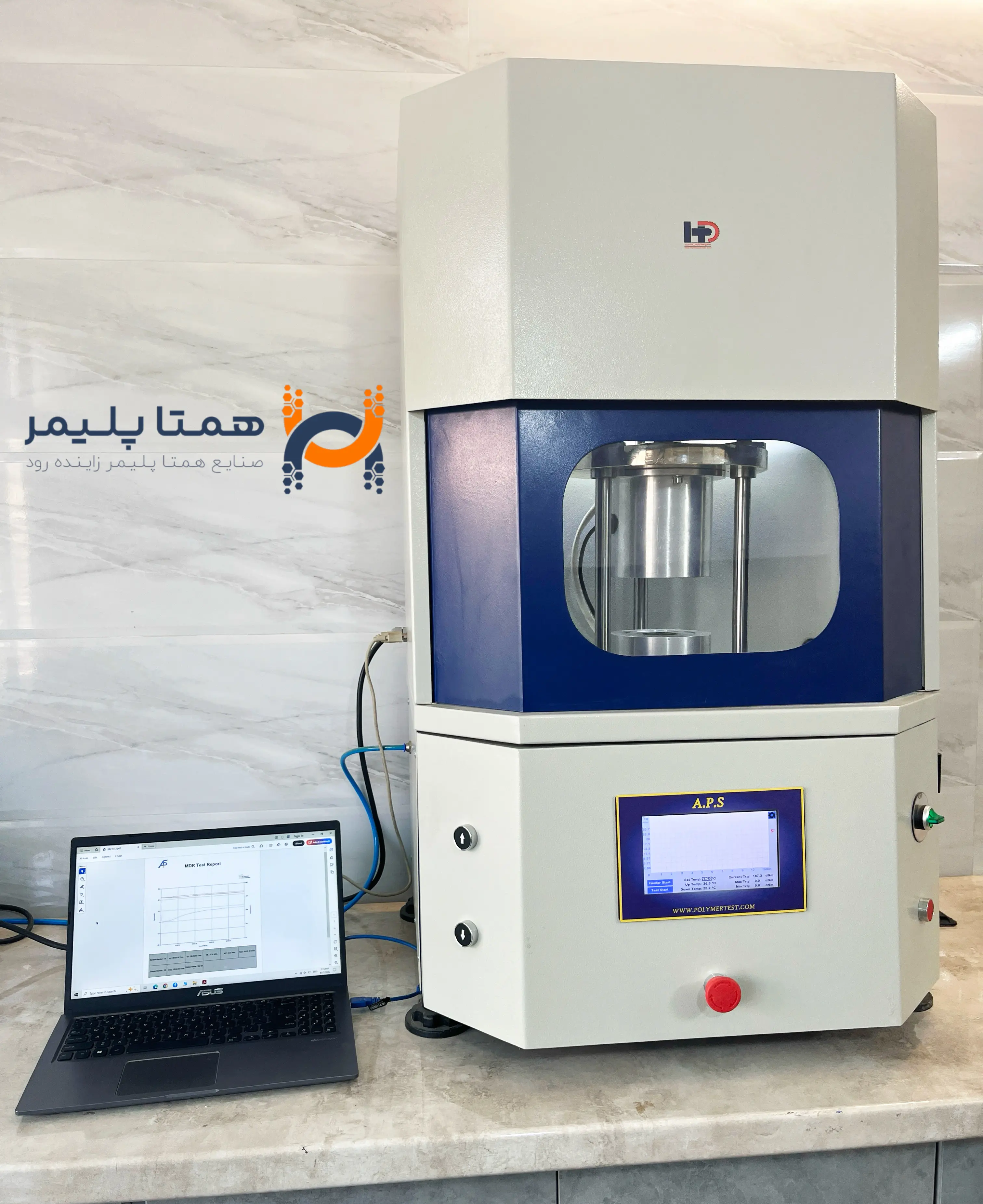
Rheometer / Cure Test
RHEOMETER / CURE TEST
Determine the rubber compound cure curve and optimize vulcanization time and temperature with MDR/ODR rheometer and standard reporting.
Full test overview
A rheometer is a central formulation-laboratory instrument for recording the cure curve of a rubber compound. The curve shows how torque—a practical indicator of compound stiffness—changes with time at a fixed temperature. Its shape provides information on cure rate, the achieved cure state and the compound's thermal stability during the programme. The moving-die rheometer (MDR) is a modern format that uses a small oscillation angle, commonly ±0.5°, and offers greater sensitivity than a legacy oscillating-disc rheometer (ODR). Key outputs include ML, the minimum torque associated with uncured-compound viscosity; MH, the maximum torque associated with the developed cure state; ts2, the scorch or cure-onset time; t90, a 90%-cure reference time often used to establish a press cycle; and CRI, the cure-rate index. For production control, cure behaviour is reviewed whenever a new compound batch or a material-source change must be assessed against an approved baseline. A variation in raw materials, including sulphur or accelerator source, can appear immediately in the cure curve and warrants investigation before moulding.
Without Rheometer testing
A formulation or component-quality deviation may remain undetected until it reaches the customer.
With Rheometer testing
Rubber quality is a measurable process, not a slogan. Without cure-curve evidence, a compound with an incorrect cure balance can enter production and create extensive non-conforming output. Rheometry helps detect the deviation at the start of the process.
Rheometer testing in 5 steps — from specimen to result
Prepare the specimen
Prepare a standard-size specimen of uncured rubber compound, commonly 5–6 g. Representative sampling and consistent mass directly affect the value of the comparison.
Set the test programme
Set temperature, oscillation frequency and recording time in accordance with ASTM D5289, ISO 6502 or the agreed internal method.
Run the test
Place the specimen in the die cavity. The oscillating die applies controlled shear at the set angle while the instrument records resistance torque throughout the test.
Analyse the cure curve
The output is an S-shaped cure curve from which ML, MH, ts2 and t90 are determined, providing a consolidated view of compound cure behaviour.
Make the production decision
Compare results with the approved formulation range. A conforming compound can proceed under the agreed production controls; a deviation is investigated and corrected before moulding.
Using Rheometer testing results in production improvement
Mould-temperature and cycle setting
The t90 reference supports press-cycle design so the part is neither under-cured nor exposed to unnecessary cure time. The actual setting must include part geometry, heat transfer and the approved process window.
Compound-flow assessment
ML indicates the uncured compound's resistance to flow under the selected test conditions and can support process-engineering assessment of mould filling and injection requirements.
Scorch prevention
ts2 indicates the available processing time before meaningful cure onset under the programme. It supports planning that reduces the risk of premature vulcanisation during processing.
Test report structure
Illustrative NBR cure-curve report structure — 70 Shore A target; values shown are a presentation example, not a published product claim.
Test information
Measurement results
← drag| Parameter | Symbol | Value | Spec | Status |
|---|---|---|---|---|
| Minimum torque | ML | 1.85 dN·m | 1.5–2.5 | Pass |
| Maximum torque | MH | 12.40 dN·m | 11.0–14.0 | Pass |
| Torque delta | MH − ML | 10.55 dN·m | ≥ 9.0 | Pass |
| Scorch time | ts2 | 1.45 min | ≥ 1.2 | Pass |
| 10% cure time | t10 | 1.80 min | — | Reported |
| 50% cure time | t50 | 3.10 min | — | Reported |
| 90% cure time | t90 | 5.60 min | 4.5–6.5 | Pass |
| Cure-rate index | CRI | 24.1 min⁻¹ | ≥ 20 | Pass |
| Reversion | Reversion | Not observed | — | Pass |
Test method
An uncured representative compound specimen is placed between the rheometer dies. At constant temperature, typically 160–180 °C, the oscillating die applies shear and the resisting torque is continuously recorded to form the cure curve.
Test conditions
Test temperature: 150 · 160 · 170 · 180 °C. Oscillation angle: ±0.5° (MDR). Frequency: 1.67 Hz (100 cpm). Recording duration: commonly 30–60 min.
Technical details
Where it is used
Technical support
MDR programme aligned with applicable cure-test references
Experienced review of cure-curve trends against an approved baseline
Unique test identification and traceable sample record
Transparent reporting for the agreed order scope
Technical interpretation linked to compound and production context
Technical FAQ
Rheometer testing is a valuable control whenever new raw materials are received, the formulation changes or a batch must be checked against an approved baseline. The specific sampling frequency should be defined in the quality plan.
ts2 is the time at which torque rises by two units above ML in the selected method and represents early cure onset or scorch safety. t90 is the time at which the defined 90% cure level is reached and is commonly used as a reference for press-cycle design; the actual cycle also requires heat-transfer and part-geometry considerations.
MDR testing is a sensitive, repeatable industry method when instrument verification, specimen preparation, temperature, fill and test programme are controlled. Results should be interpreted against the same method and an approved reference range.
The report format can include the cure curve and all measured parameters for the agreed sample. Delivery timing and reporting scope should be agreed with the order.
An MH lower than the approved range can indicate a change in sulphur or accelerator level, a raw-material issue, contamination or excessive uncured-compound age. A meaningful deviation from the approved range should trigger a technical review.
The recording period depends on test temperature and cure system, commonly from about 10 to 30 minutes for a defined programme. The full curve, not just a single time value, should be reviewed.
Request Rheometer testing
Share the material, sample condition, applicable standard and the decision this test should support.
Other laboratory tests
Rubber hardness testing
Accurate hardness measurement of rubber components on the Shore A and Shore D scales.
Tensile testing
Determination of tensile strength, elongation and modulus of elastomer materials.
Fluid-exposure and swelling testing
Assessment of elastomer resistance to oils, fuels and chemical solvents.