
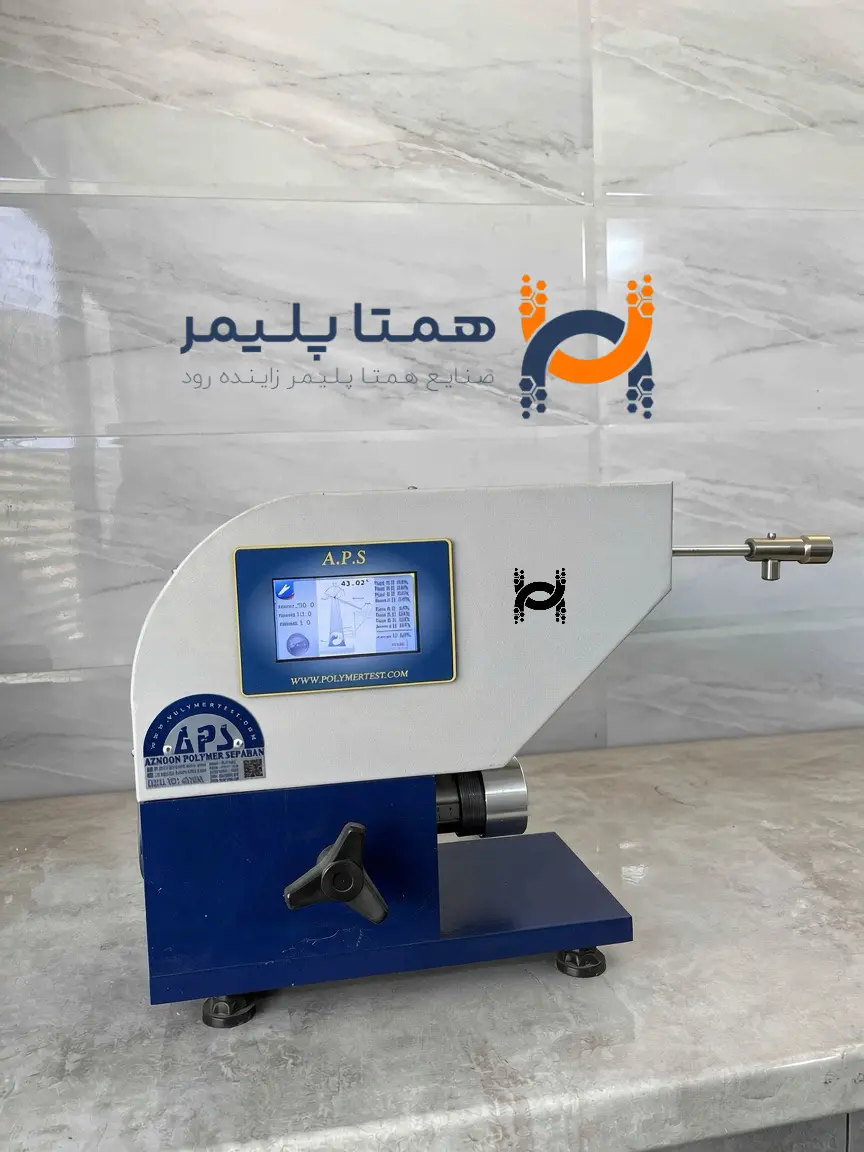
Rebound Resilience Test
REBOUND RESILIENCE TEST
Measure elastomer energy return (rebound resilience) with standard equipment and precise reporting.
Full test overview
Rebound-resilience testing measures the percentage of impact energy returned by an elastomer and is directly related to hysteresis. When rubber is struck, part of the input energy is dissipated as heat while the remainder is stored elastically and returned. The ratio of returned energy to input energy is reported as rebound resilience. High rebound, commonly associated with suitably formulated NR, indicates lower energy loss and heat build-up and can be desirable in tyres, rollers and dynamic couplings. Lower rebound, often associated with damping compounds such as IIR, indicates greater energy absorption and can be desirable in vibration isolators, impact absorbers and acoustic-damping components. Neither high nor low is inherently superior; suitability depends on the duty. Resilience is temperature-sensitive. NR rebound typically falls as temperature approaches its glass-transition region and changes as temperature rises, while butyl compounds can retain relatively high damping over a broad range. Multi-temperature data are therefore important for parts operating under changing thermal conditions.
Without Resilience testing
A formulation or component-quality deviation may remain undetected until it reaches the customer.
With Resilience testing
The bounce of a rubber ball and the vibration absorbed by a machinery mount are two expressions of the same energy-return behaviour. Resilience governs the rubber's response to impacts, vibration and rapid deformation; selecting the wrong response can cause early fatigue, excessive heat or poor damping.
Resilience testing in 5 steps — from specimen to result
Prepare specimens
Prepare specimens with smooth, uniform faces and no bubbles, cracks or contamination. A common specimen is a 29 mm diameter × 12.5 mm disc; use at least three independent specimens per batch where required by the programme.
Condition and verify the instrument
Condition specimens at 23 ± 2 °C for the specified period. Before testing, verify the pendulum against the applicable reference procedure so the rebound-height reading is valid.
Run the impacts
Secure the specimen so it cannot move during impact and release the pendulum from the standard height. Apply the method-defined number of impacts; discard the conditioning impact and average the subsequent valid readings where specified.
Calculate the result
Calculate R(%) = (h₂/h₁) × 100, where h₁ is release height and h₂ rebound height. For example, a 60 mm return from 100 mm corresponds to 60% rebound. Report dispersion where the programme requires it.
Interpret for the duty
Compare the result with the approved specification or reference compound. Interpret it with polymer type, cure system, hardness and service temperature before making a material decision.
Using Resilience testing results in production improvement
Correct material-response selection
Higher-rebound compounds can suit low-loss dynamic duties, while lower-rebound compounds can suit vibration and impact damping. Test data confirms the required balance for the actual component.
Heat-build-up assessment
In dynamic tyres, belts and couplings, lower rebound generally means more input energy is dissipated as heat. Reviewing resilience alongside rheometer and mechanical data gives a more complete engineering picture.
Multi-temperature evaluation
Because rebound is strongly temperature-dependent, testing at service-relevant cold, ambient and elevated temperatures supports assessment across the intended operating envelope.
Test report structure
Illustrative carbon-black-reinforced NR rebound report structure — values shown are a presentation example, not a published product claim.
Test information
Measurement results
← drag| Parameter | Symbol | Value | Spec | Status |
|---|---|---|---|---|
| Specimen 1 rebound | R₁ | 64% | 55%–70% | Pass |
| Specimen 2 rebound | R₂ | 66% | 55%–70% | Pass |
| Specimen 3 rebound | R₃ | 62% | 55%–70% | Pass |
| Final mean | R̄ | 64% | 55%–70% | Pass |
| Standard deviation | σ | 2.0% | — | Reported |
| Uniformity assessment | — | Uniform | — | Pass |
Test method
Release a pendulum from a defined height onto the rubber specimen, record its rebound height and convert it to rebound percentage. Report the average of valid impacts at the specified interval.
Test conditions
Test temperature: 23 ± 2 °C, or other agreed temperatures using a chamber. Perform the specified number of impacts at controlled intervals; discard conditioning impacts where required.
Technical details
Where it is used
Technical support
Schob pendulum programme aligned with ISO 4662
Multi-temperature testing can be scoped for the service range
Comparative reporting against relevant elastomer references
Application-based interpretation for material selection
Formulation discussion to support a specified rebound target
Technical FAQ
It depends on the application. High rebound and low heat build-up can benefit tyres and transfer rollers; lower rebound and higher energy absorption can benefit dampers and vibration isolators. A mismatch can cause excess fatigue, heat build-up or inadequate damping.
There is no direct one-to-one relationship. A soft 40 Shore A compound may have high rebound, as with some NR formulations, or low rebound, as with some IIR formulations. Hardness measures indentation resistance; resilience describes dynamic energy loss and return.
Yes, often substantially. Rebound changes as the polymer approaches its glass-transition region, and elastomer families respond differently. Testing at multiple service-relevant temperatures is recommended where the component operates across a wide thermal range.
No. For many applications it is an advantage. IIR's high damping is useful in vibration isolation, acoustic-control components, pharmaceutical closures and tyre inner layers where energy absorption or low gas permeability is required.
Request Resilience testing
Share the material, sample condition, applicable standard and the decision this test should support.
Other laboratory tests
Rubber hardness testing
Accurate hardness measurement of rubber components on the Shore A and Shore D scales.
Tensile testing
Determination of tensile strength, elongation and modulus of elastomer materials.
Fluid-exposure and swelling testing
Assessment of elastomer resistance to oils, fuels and chemical solvents.