
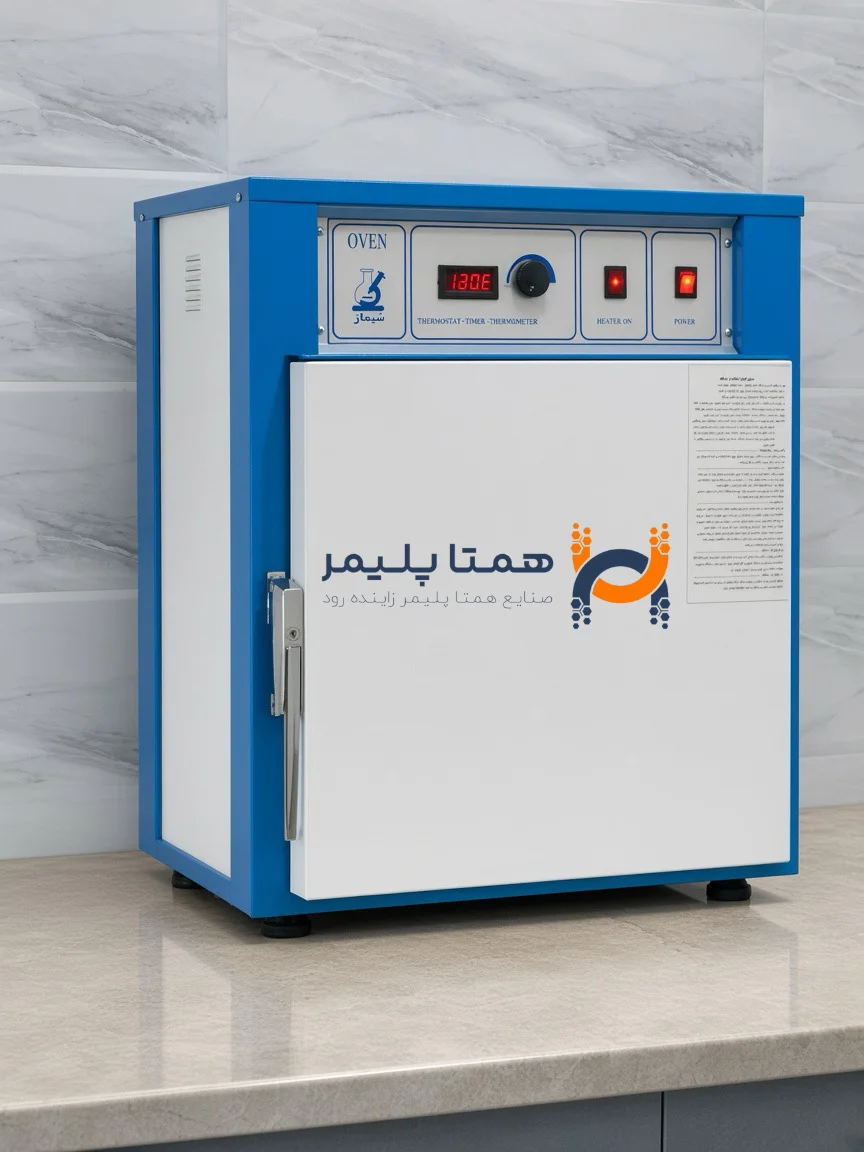
Heat Aging Test
HEAT AGING TEST
Evaluating changes in elastomer hardness, tensile strength and elongation after prolonged exposure to elevated temperature — per international standards.
Full test overview
Heat ageing is a principal tool for estimating the useful life of rubber products exposed to elevated temperature. During sustained heat exposure, competing mechanisms can occur: oxidation may cause chain scission and degradation, while additional crosslinking may increase stiffness. The prevailing mechanism depends on the elastomer family, formulation and exposure conditions. Elastomers with a more saturated backbone, including EPDM, silicone and FKM, generally offer greater heat resistance than unsaturated systems such as many NBR and NR compounds. Antioxidants and antiozonants can materially improve thermal durability. A multi-temperature programme can provide data for an Arrhenius-based life assessment, but extrapolation requires a technically justified programme and should not be treated as a blanket product-life promise. Following exposure, specimens are assessed for hardness and tensile-property changes against the control condition. A change within ±15% in primary properties is a common screening criterion, but the applicable product or industry specification may require a different limit.
Without Heat-ageing testing
A formulation or component-quality deviation may remain undetected until it reaches the customer.
With Heat-ageing testing
A customer cannot wait years to discover whether a rubber part will survive its thermal duty. Heat-ageing evidence accelerates the comparison of thermal durability in the laboratory. It turns a service-life discussion from an unsupported assurance into a controlled data set, provided the programme and extrapolation are technically appropriate.
Heat-ageing testing in 5 steps — from specimen to result
Prepare control and exposure specimens
For each temperature condition, prepare five dumb-bell specimens for tensile testing and three discs for hardness. Keep one set as the 23 °C control. All specimens should come from the same production batch so the comparison is meaningful.
Design the multi-temperature programme
For Arrhenius-based assessment, conduct exposure at a minimum of three temperatures, for example 70 °C / 70 h, 100 °C / 70 h and 125 °C / 70 h. Temperatures should create measurable change without changing the governing degradation mechanism.
Expose in a forced-air oven
Suspend specimens rather than lay them on a surface in an oven with controlled 3–10 air exchanges per hour. Suspension avoids surface contact and blocking. Different elastomer types should not share an exposure chamber where cross-contamination could affect results.
Cool and condition
After the exposure period, cool and condition specimens at ambient conditions for at least 16 hours. Testing immediately after removal can give misleading results because the elastomer has not regained thermal equilibrium.
Test and compare with control
Test aged specimens for hardness and tensile properties. Report ΔHardness, ΔTS% and ΔEB% relative to the control, then compare each parameter with the agreed acceptance basis.
Using Heat-ageing testing results in production improvement
Arrhenius-based life assessment
Testing at three temperatures can support a documented plot of lifetime against reciprocal absolute temperature. The often-cited Q10 rule is only an empirical screening guide; the actual activation behaviour must be supported by the material's own data.
Antioxidant-system evaluation
Comparing controlled formulations with and without a chosen antioxidant package can show its effect on retained properties after thermal exposure. This supports selection of the additive type and level within the complete formulation.
Definition of temperature capability
Ageing results across temperatures support selection of a temperature range in which the elastomer retains acceptable properties for the defined duty. This is relevant to engines, ovens, exhaust-adjacent parts and other thermal applications.
Test report structure
Illustrative EPDM sealing-gasket ageing report structure — values shown are a presentation example, not a published product claim.
Test information
Measurement results
← drag| Parameter | Symbol | Value | Spec | Status |
|---|---|---|---|---|
| Hardness before ageing | H₀ | 65 Shore A | — | Reported |
| Hardness after ageing | H₁ | 69 Shore A | — | Reported |
| Hardness change | ΔH | +4 units | ≤ ±8 units | Pass |
| Tensile-strength change | ΔTS% | −8% | ≤ ±15% | Pass |
| Elongation change | ΔEB% | −12% | ≤ ±25% | Pass |
| Visual condition | — | No cracking or tackiness observed | — | Pass |
| Overall result | — | Conforms | — | Pass |
Test method
Suspend specimens in a controlled forced-air oven for the agreed time and temperature, allow at least 16 hours of ambient cooling and conditioning, then test hardness and tensile properties against unaged control specimens.
Test conditions
Temperature: 70 · 100 · 125 · 150 · 200 °C. Duration: 22 · 70 · 168 h. Air exchange: 3 to 10 changes per hour.
Technical details
Where it is used
Technical support
Multiple ±1 °C ovens for parallel temperatures in an Arrhenius profile
Controlled air exchange of 3 to 10 changes per hour in line with ISO 188 programmes
Combined ageing, tensile and hardness testing in one defined order
Arrhenius life-estimation assessment can be scoped for the actual operating temperature
Oil-ageing programme can combine thermal and chemical exposure for O-rings and rotary seals
Technical FAQ
An Arrhenius assessment normally uses results from at least three temperatures and a documented extrapolation method. The relationship must be verified for the compound and relevant degradation mechanism; it is not valid to convert a single 70-hour result directly into a generic service-life guarantee.
EPDM generally has better heat resistance because of its more saturated polymer backbone. Many NBR duties are limited around 120 °C, EPDM can be suitable to around 150 °C and silicone to higher temperatures, but exact limits depend on formulation, fluid, pressure and required lifetime.
It depends on elastomer type and exposure temperature. NBR may harden at moderate temperature through additional crosslinking, then soften at higher temperature if chain degradation dominates. NR commonly softens and can become tacky with ageing.
Yes. Oil ageing combines thermal exposure with the chemical effect of the oil and can give a more representative programme for O-rings and rotary-shaft seals. The fluid, temperature, duration and post-exposure measurements must be explicitly defined.
Request Heat-ageing testing
Share the material, sample condition, applicable standard and the decision this test should support.
Other laboratory tests
Rubber hardness testing
Accurate hardness measurement of rubber components on the Shore A and Shore D scales.
Tensile testing
Determination of tensile strength, elongation and modulus of elastomer materials.
Fluid-exposure and swelling testing
Assessment of elastomer resistance to oils, fuels and chemical solvents.